

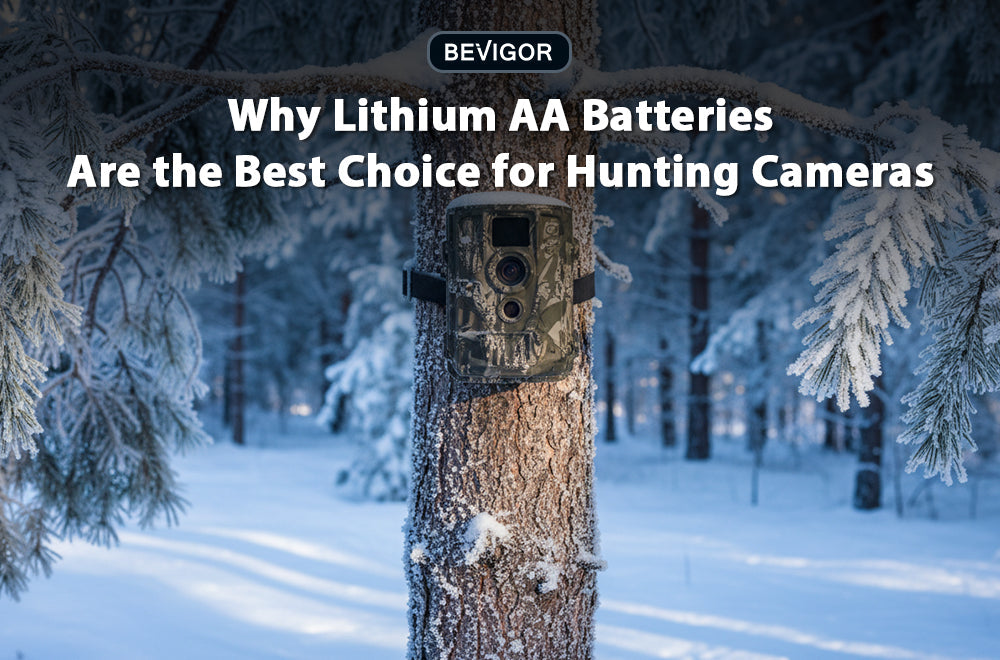
Tired of your trail camera missing the perfect shot because of dead cells? Outdoor scouting requires power that survives freezing nights and months of standby time in remote locations.
We explore how Lithium AA Batteries optimize camera trigger speeds, night vision performance, and long-term hardware reliability in the wild.

How Temperature Resistance Affects Lithium AA Batteries
When you set up a scouting camera in the late autumn or winter, standard alkaline chemistry becomes your primary enemy. Alkaline batteries utilize a water-based electrolyte that thickens as temperatures drop toward freezing. This physical change increases internal resistance, preventing the battery from delivering enough current to wake the camera from its sleep mode.
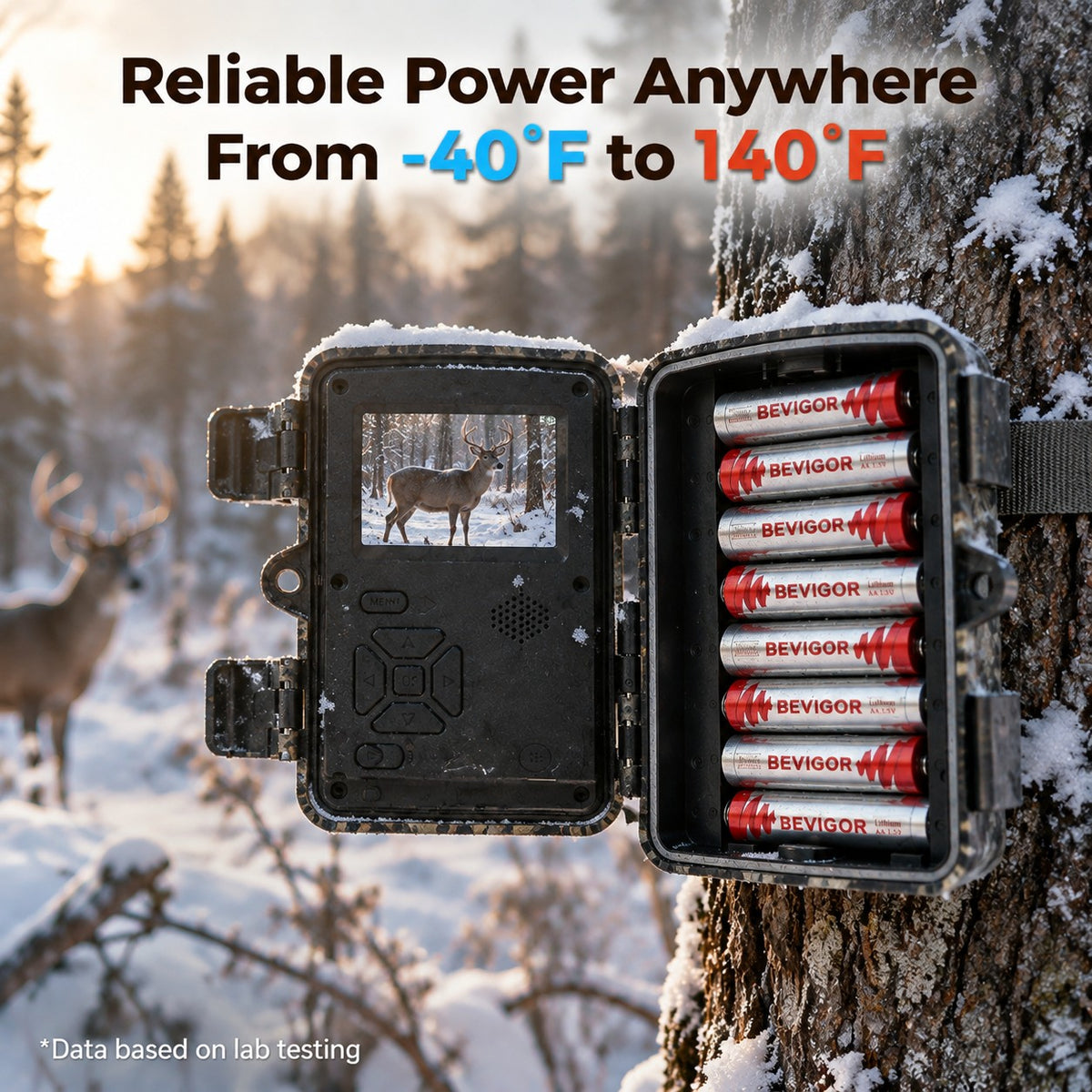
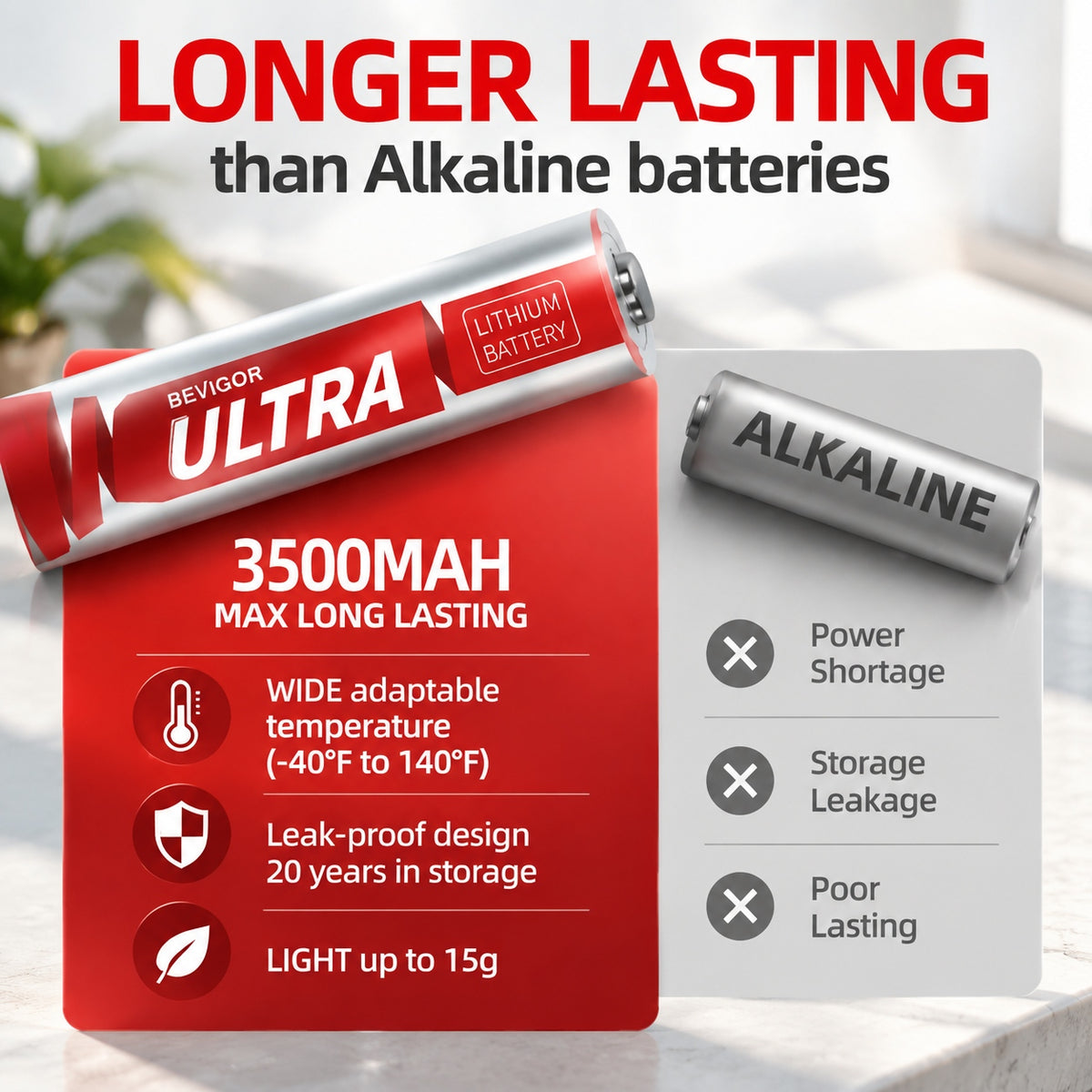
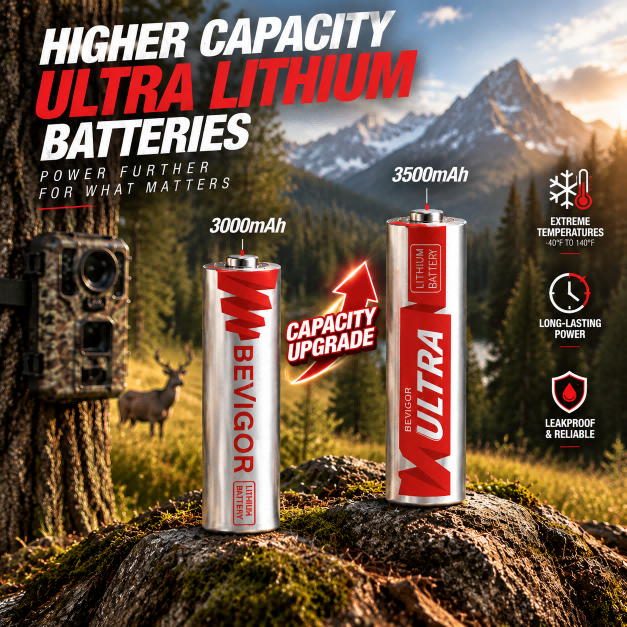
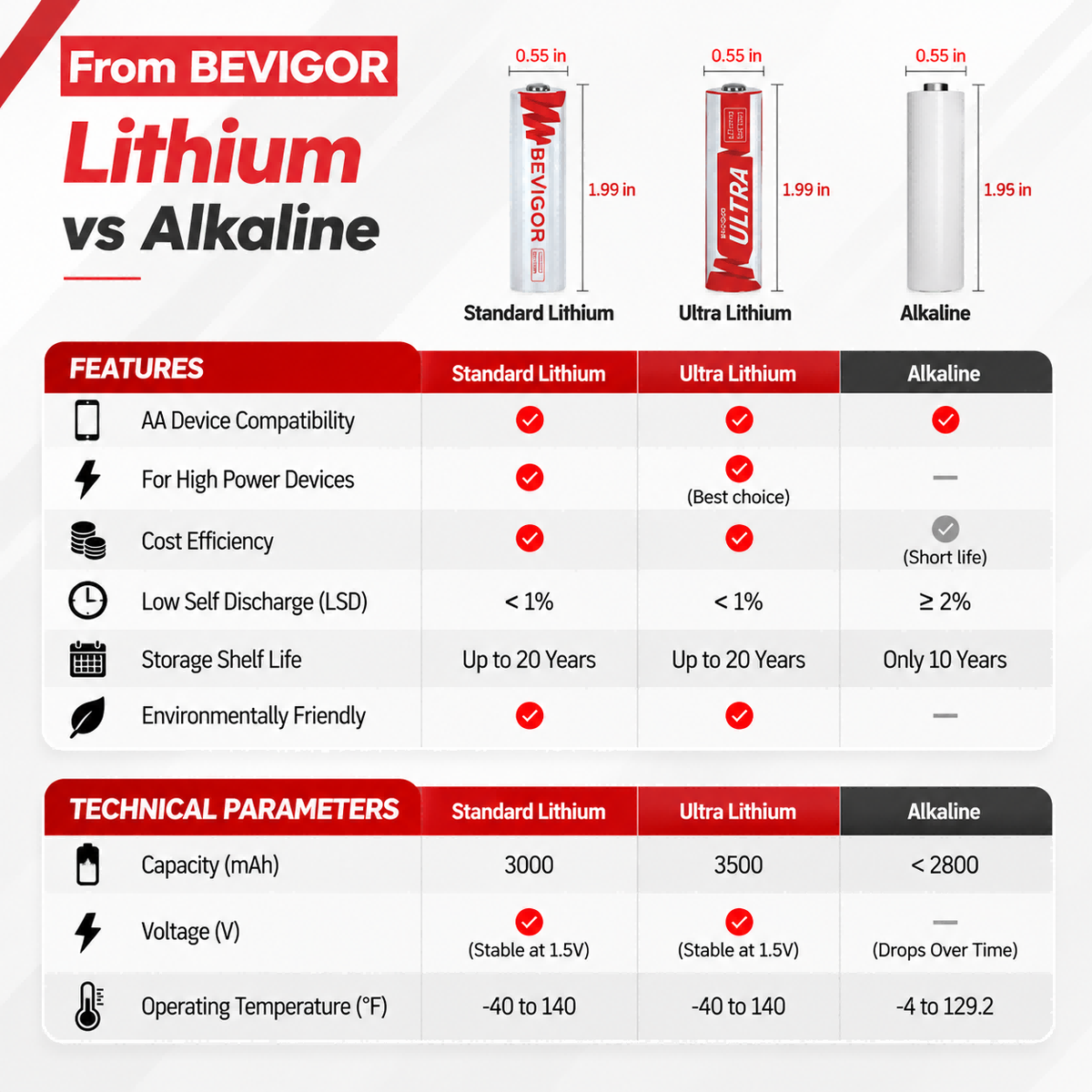
Conversely, the chemical architecture of Lithium AA Batteries does not rely on liquid components that freeze. Based on official laboratory specifications by Bevigor, these cells maintain peak efficiency in environments ranging from minus 40 to 140 degrees Fahrenheit. According to technical research from the National Renewable Energy Laboratory (NREL), solid-state and advanced lithium chemistries are significantly less affected by thermal fluctuations, ensuring your camera triggers reliably during a mid-winter blizzard.
Maintaining High Voltage with Lithium AA Batteries
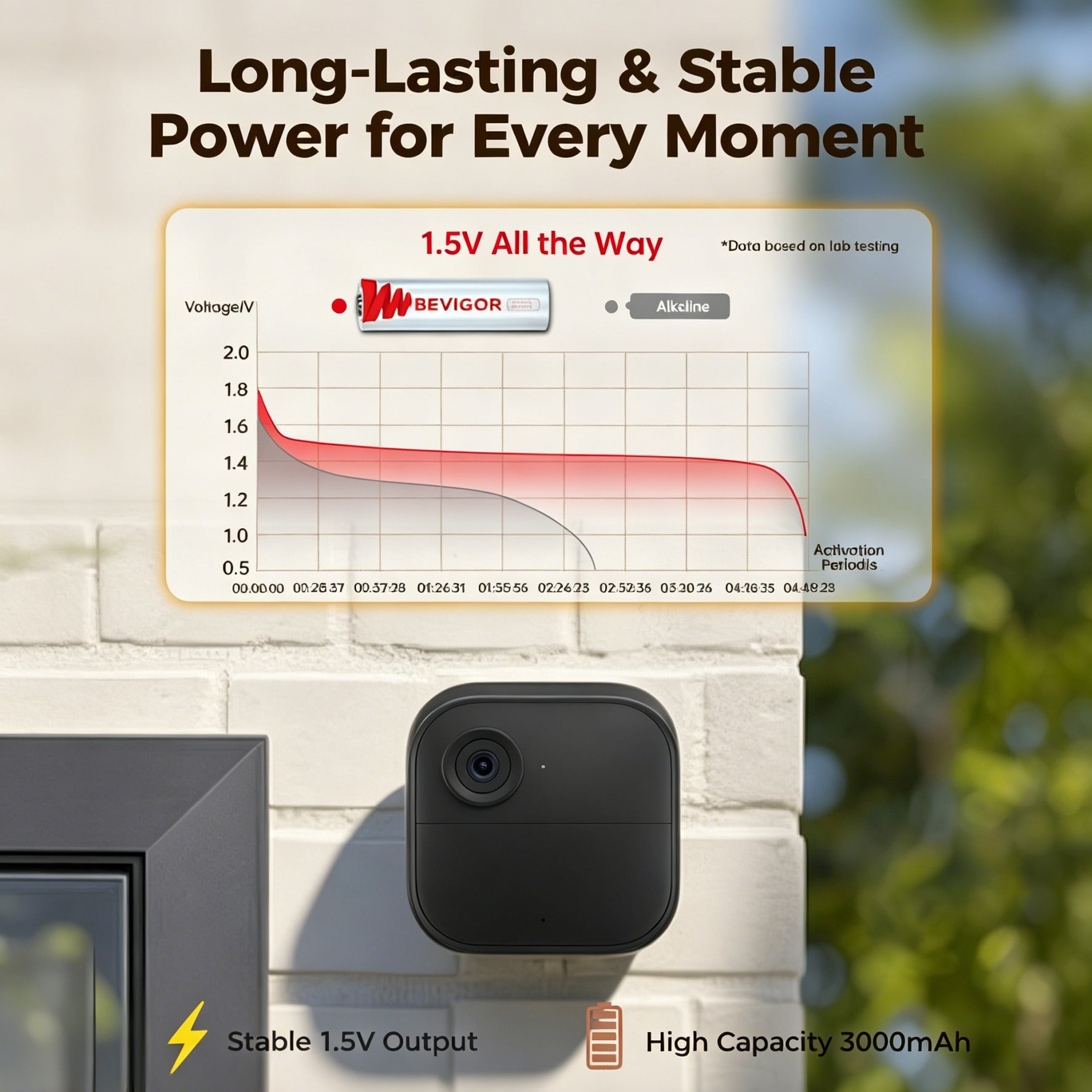
Most modern hunting cameras are designed to operate optimally at 1.5 volts. While alkaline batteries start at 1.5 volts, their voltage drops linearly the moment they begin to discharge. Once the voltage hits roughly 1.2 or 1.1 volts, many trail cameras will stop recording video or disable the infrared flash to save power, even if the battery still holds half its energy.
The primary advantage of Lithium AA Batteries is their exceptionally flat discharge curve. They stay at a steady 1.5 volts for nearly 95% of their entire life cycle. This means your camera receives full power for every single shot until the battery is nearly empty. By choosing high-quality Bevigor Lithium batteries, you ensure that your equipment does not prematurely shut down or enter a low-power state that results in dark, unusable nighttime photos.
Improving Trigger Response with Lithium AA Batteries
A hunting camera spends 99% of its time in a low-power standby mode. When the PIR sensor detects movement, the camera must "wake up" and fire the shutter in a fraction of a second. This rapid burst of activity requires an immediate surge of high current. If the battery cannot provide this surge instantly, the trigger speed lags, and you end up with a photo of a deer's tail instead of its head.
Because Lithium AA Batteries have much lower internal resistance compared to alkaline, they can deliver high current instantly. This allows the camera processor and sensor to activate at their maximum rated speed. For hunters who rely on capturing fast-moving game, the difference between standard chemistry and lithium is often the difference between a successful scout and a wasted trip to the field.
Impact on Night Vision with Lithium AA Batteries
Nighttime recording is the most energy-intensive task a scouting camera performs. Powering an array of infrared LEDs requires a significant and sustained draw of electricity. If your power source is weak, the IR flash will appear dim, resulting in grainy or completely black night photos where the subject is impossible to identify.
Using Lithium AA Batteries ensures that the LED array receives the consistent 1.5 volts required for a bright, clear flash. This is especially important for cameras that record high-definition video at night, which can drain a standard battery in just a few days of heavy activity. If you are monitoring a high-traffic scrape or feeder, the sustained output of lithium chemistry is usually the only way to get clear footage across an entire month of scouting without needing a replacement.
Comparing Weight and Portability of Lithium AA Batteries
For hunters who trek deep into public land or manage dozens of cameras across a large property, pack weight is a serious consideration. Carrying a dozen spare sets of AA batteries can add significant mass to your pack, leading to unnecessary fatigue during long hikes.
Lithium is the lightest metal on the periodic table, and this physical property translates directly to the weight of the cell. Lithium AA Batteries weigh approximately 33% less than standard alkaline units. While a few grams might seem negligible in the store, the weight savings are substantial when you are carrying backup power for a full fleet of cameras. Switching to Bevigor helps you stay lighter on your feet, allowing you to cover more ground and place cameras in more remote, undisturbed areas where big bucks are likely to hide.
Frequently Asked Questions About Trail Camera Power
Why does my camera battery meter show 100% then suddenly drop to 0%?
This is a side effect of the flat discharge curve. Most camera meters estimate life based on voltage. Since Lithium AA Batteries stay at 1.5 volts until they are nearly exhausted, the camera thinks they are full until the very end. It is usually a good idea to check your camera's "last photo" timestamp to monitor status.
Can I use rechargeable NiMH cells in my scouting cameras?
You can, but it is often not recommended for cold weather. Rechargeable NiMH options are excellent for high-drain toys at home, but they only provide 1.2 volts. Many trail cameras will interpret this lower voltage as a "low battery" and may refuse to record nighttime videos or fire the flash.
Will these batteries leak and ruin my expensive camera?
The solid construction of lithium chemistry makes them virtually leak-proof. Unlike alkaline batteries, which often leak corrosive acid when they are fully discharged or left in the heat, your investment remains safe. You can find more maintenance tips on the Bevigor support blog to ensure your gear lasts for multiple seasons.
How many photos can I expect from a single set?
This depends heavily on your camera settings. If you record 4K video with a long night flash, you might get 5,000 photos. If you only take daytime stills, a set of quality lithium cells can easily capture over 20,000 images over six months of standby.
Are they safe for high-end cellular trail cameras?
Absolutely. Cellular cameras are even more demanding because they must power a cellular modem to transmit photos. The high-current capability of lithium is usually required to maintain a stable signal connection in areas with weak cellular reception.
Important Usage Notes and Safety
To maximize the performance of your outdoor scouting equipment, please follow these professional operational guidelines.
- Specifications: All temperature ratings and capacity estimates are based on Bevigor laboratory testing. Actual field performance will vary based on camera trigger frequency and cellular signal strength.
- Storage: Keep your spare sets in a cool, dry place. While they handle the cold during use, storing them in a hot truck during the summer can reduce their overall shelf life.
- Strict Taboos: Never mix old and new cells in the same camera. You must also avoid mixing different chemistries, such as placing an alkaline battery next to a lithium one, as this creates a risk of overheating and hardware damage.
- Recycling: When your cells are finally empty, please do not leave them in the woods. Utilize local recycling centers to dispose of lithium components properly and keep our hunting grounds clean.



Share:
Can You Use AA Lithium Batteries Instead of Alkaline Batteries?
What Uses AAA Batteries? Common Devices and Choosing the Right Type