


For Blink cameras whose current instructions specify AA 1.5-volt lithium non-rechargeable batteries, the practical answer is no: use the battery type Blink specifies rather than substituting rechargeable AA cells. A rechargeable battery may fit the compartment, but its voltage, chemistry, discharge behavior, and protection electronics may differ from the camera’s requirements.
This distinction matters because “rechargeable AA” is not one universal specification. Many nickel-metal hydride (NiMH) AA products are labeled 1.2 volts. Products sold as rechargeable lithium AA batteries may provide a regulated 1.5-volt output, while some AA-sized lithium-ion cells carry much higher voltage labels. Those categories should not be treated as interchangeable.
Start With Your Exact Blink Model
Blink sells both battery-powered and externally powered cameras. Before comparing batteries, identify the exact model in the Blink app or on the device label. Blink Mini and Mini 2 cameras, for example, use wired power rather than replaceable AA batteries. Other models have their own power arrangements.
Blink’s current camera power requirements state that its named AA-powered cameras are designed for size AA 1.5-volt lithium non-rechargeable batteries. Treat the official page and the instructions for your exact model as the controlling source, because a battery recommendation for one Blink product may not apply to another.
The safest compatibility question is not simply, “Does this battery fit?” Ask all four questions:
- Does the model use replaceable AA batteries?
- Does the battery match the required nominal voltage?
- Does it match the specified chemistry and rechargeable/non-rechargeable designation?
- Does the current device documentation permit that battery type?
If any answer is no or unclear, do not install the battery until you verify the model documentation.
Rechargeable AA vs. the Specified Battery Type
| Battery category | Typical label to look for | Rechargeable? | Compatibility takeaway |
|---|---|---|---|
| Primary lithium AA | AA, 1.5V, lithium, non-rechargeable | No | Matches the stated requirement for Blink models that specify this battery type |
| NiMH AA | AA, usually 1.2V, NiMH | Yes | Same physical size but a different nominal voltage and chemistry; not the specified type |
| Regulated rechargeable lithium AA | AA, often labeled 1.5V rechargeable | Yes | Output may be regulated, but it is still not the specified non-rechargeable chemistry; follow model documentation |
| Lithium-ion 14500 | Check the individual cell label; some are marked 3.6V or 3.7V Li-ion | Yes | A cell labeled above 1.5V does not match a 1.5V AA requirement; do not use based on size alone |
| Alkaline AA | AA, 1.5V alkaline | No | Voltage label alone does not make it the specified lithium battery type |
The table is a label-reading guide, not a claim that every battery within a category performs identically. Product designs and protection circuits vary. The device requirement remains the deciding factor.
Why NiMH Rechargeable Batteries Are Different
NiMH rechargeable AA batteries are common in toys, game controllers, flashes, and other household devices. Their reusability can make sense where the device manufacturer permits NiMH. That does not make them a drop-in replacement for every product that accepts an AA-sized cell.
The most obvious difference is labeled nominal voltage. Panasonic’s current eneloop product specifications, for example, list its standard AA NiMH battery at 1.2V. The Blink models covered by the official requirement call for 1.5V lithium non-rechargeable cells. Because a lower-voltage rechargeable does not match that requirement, users may see inaccurate battery reporting, shorter service intervals, unreliable operation, or an early low-battery message. Exact behavior varies by camera, settings, conditions, and the individual cells.
That does not mean every NiMH cell will cause the same symptom immediately. Camera settings, motion activity, Live View use, Wi-Fi conditions, temperature, battery age, and the individual cell all influence what a user sees. The important point is simpler: temporary operation does not establish official compatibility.
If you are comparing battery categories more broadly, the BEVIGOR Blink camera battery guide explains the general selection factors. This page stays focused on rechargeable compatibility.
“Rechargeable Lithium AA” Can Mean Very Different Products
The word “lithium” does not identify one voltage or one charging system. Read the complete label rather than relying on the battery’s size, color, or marketing name.
Regulated 1.5V rechargeable lithium AA batteries
Some rechargeable lithium AA products use internal electronics to provide a regulated output near 1.5 volts. Matching the voltage printed on a primary AA does not make the two products chemically or electronically identical. Their discharge curve, cutoff behavior, state-of-charge reporting, charging method, and protection design can differ.
Unless the current documentation for your exact Blink model explicitly allows that rechargeable type, do not assume it is supported merely because the label says 1.5V.
3.6V or 3.7V lithium-ion 14500 cells
Some lithium-ion cells use the 14500 size designation and can resemble an AA battery in overall shape. Read the voltage printed on the individual cell: if it is labeled 3.6V or 3.7V, it does not match a camera specification calling for a 1.5V AA battery and may exceed the device’s designed input. Do not install it based on physical fit.
Never place a primary lithium AA in a charger. Charge only batteries specifically marked rechargeable, using the charging equipment and procedure specified by that battery manufacturer.
What About Alkaline Batteries?
Alkaline AA batteries are not rechargeable, but they illustrate the same compatibility principle: matching size and a 1.5V label does not automatically match the specified chemistry or expected discharge behavior.
For a focused comparison, see whether alkaline batteries can be used in a Blink camera. Do not mix alkaline and lithium cells, and do not combine old and new batteries in the same camera.
A Five-Point Compatibility Check Before Installing Batteries
1. Identify the model
Confirm the full model name rather than relying on “Blink camera” as a category. Mini, Doorbell, Outdoor, Indoor, XT, and other generations do not all use the same power arrangement.
2. Read the device requirement
Check Blink’s current support page and the instructions supplied with the camera. Record the battery size, nominal voltage, chemistry, cell count, and whether the required battery is rechargeable.
3. Read every battery label
Look for the chemistry, nominal voltage, and the words “rechargeable” or “non-rechargeable.” Do not infer these details from the AA shape or the word “lithium.”
4. Use a matched pair when the model takes two cells
Use two fresh cells of the same specified chemistry, nominal voltage, and rechargeable/non-rechargeable type. Do not mix chemistries, old and new cells, or substantially different charge levels. If you need help opening the compartment and confirming polarity, follow the BEVIGOR Blink camera battery replacement guide alongside the official instructions for your model.
5. Check the camera after installation
Confirm that the camera reconnects, reports normally in the app, and responds as expected. If it remains offline or displays an unexpected light pattern, troubleshoot the model-specific power and connection sequence instead of repeatedly swapping battery chemistries.
If Rechargeable Batteries Are Already Installed
If the camera is operating, do not treat that alone as proof of compatibility. Check the battery label and model requirement. If they do not match, replace the cells with the specified type rather than waiting for an error.
If the camera is offline or reporting low battery:
- Remove the cells according to the camera instructions.
- Inspect the compartment for incorrect polarity, contamination, or visible damage.
- Do not reuse a swollen, leaking, overheated, or damaged battery.
- Install a fresh matched pair of the specified battery type.
- Recheck the app and connection status before assuming the camera has failed.
Do not attempt to recharge any battery marked non-rechargeable. If the camera or battery compartment shows heat damage or deformation, stop using it and contact the appropriate manufacturer for support.
Choosing the Specified Non-Rechargeable Option
If your exact Blink model specifies AA 1.5V lithium non-rechargeable batteries, compare those four label details before purchasing. Battery life still varies with camera model, motion frequency, clip length, Live View use, signal strength, temperature, and battery age, so no battery should be presented as guaranteeing a fixed runtime.
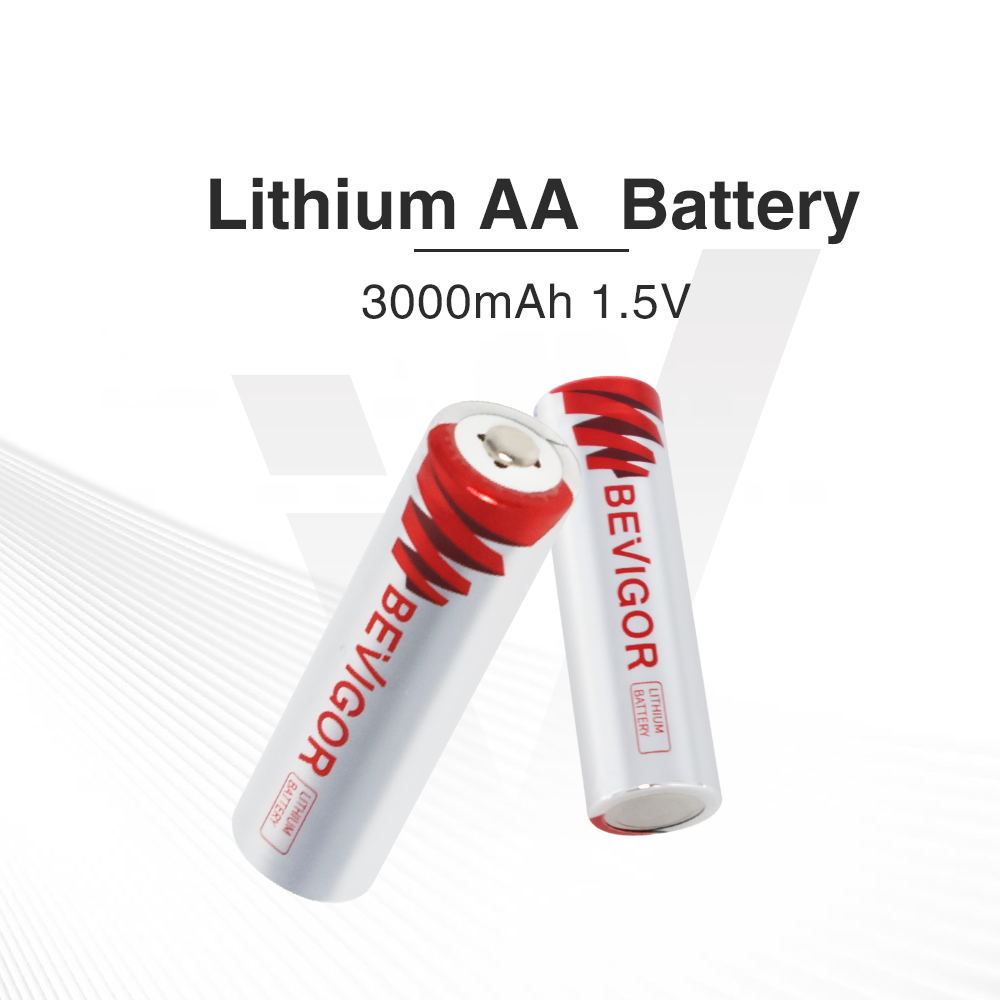
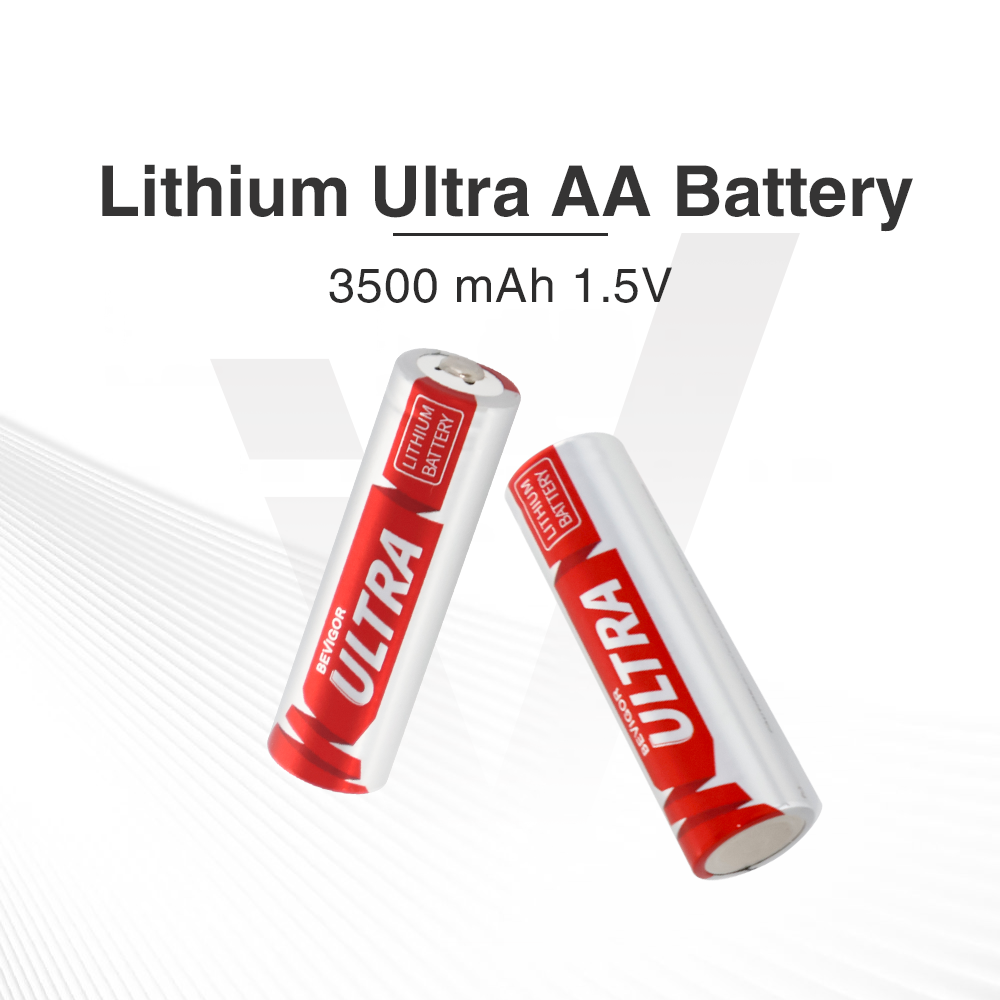
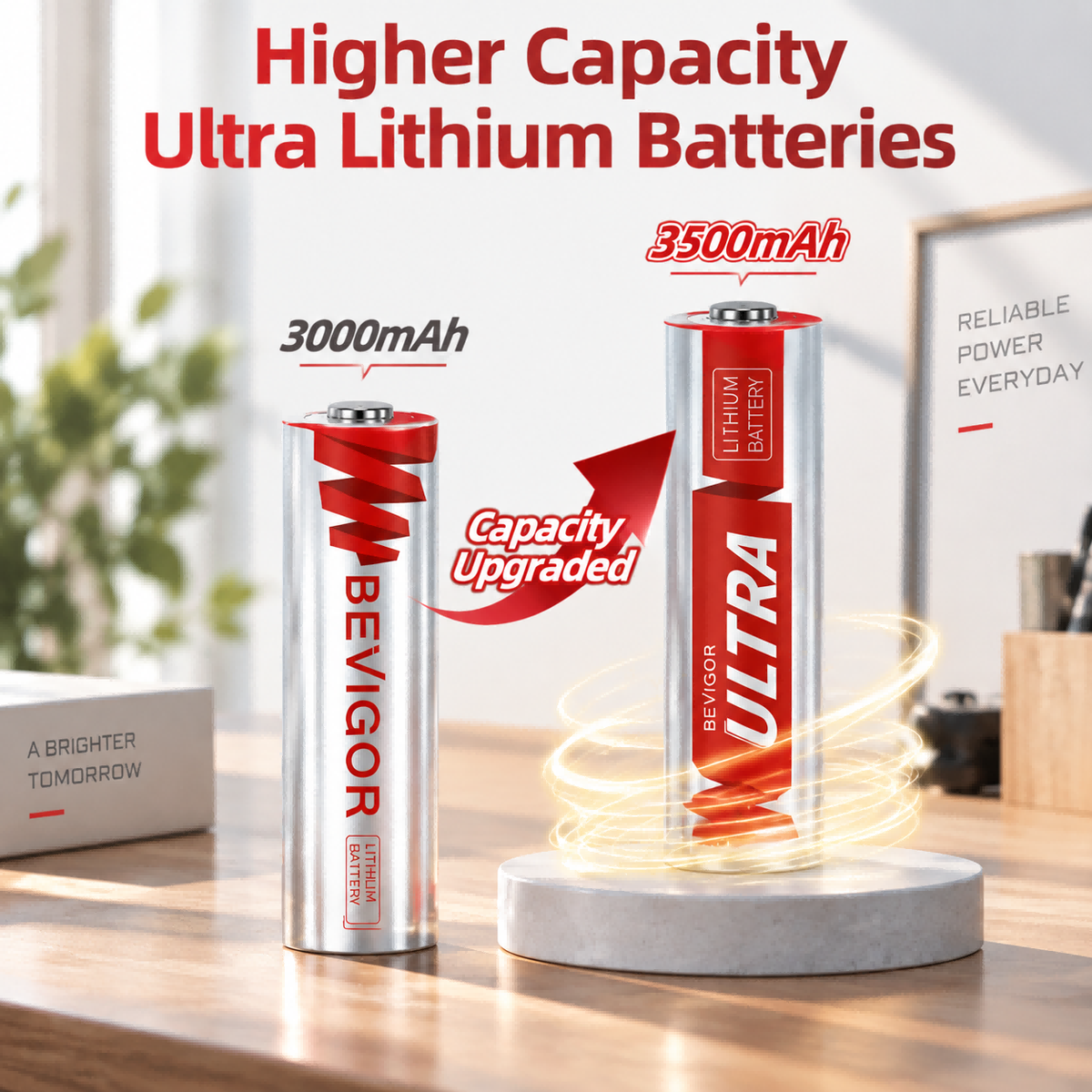
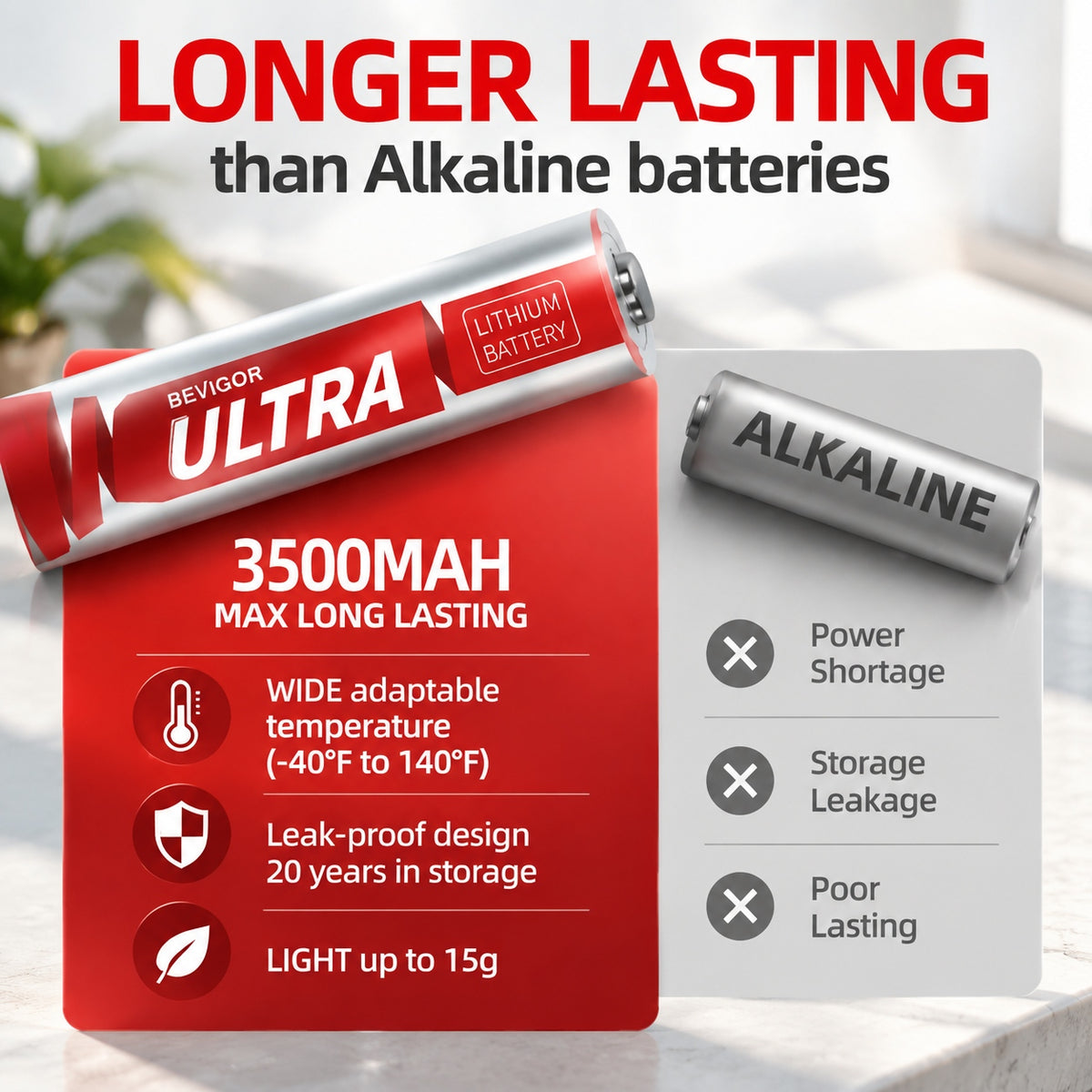
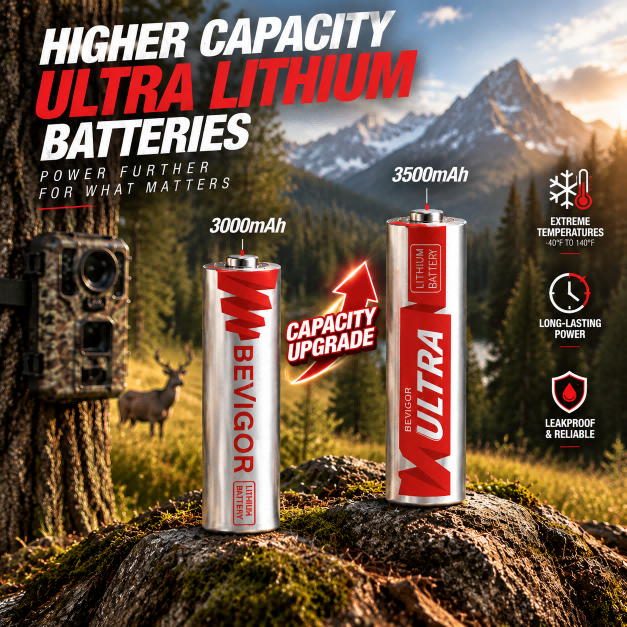
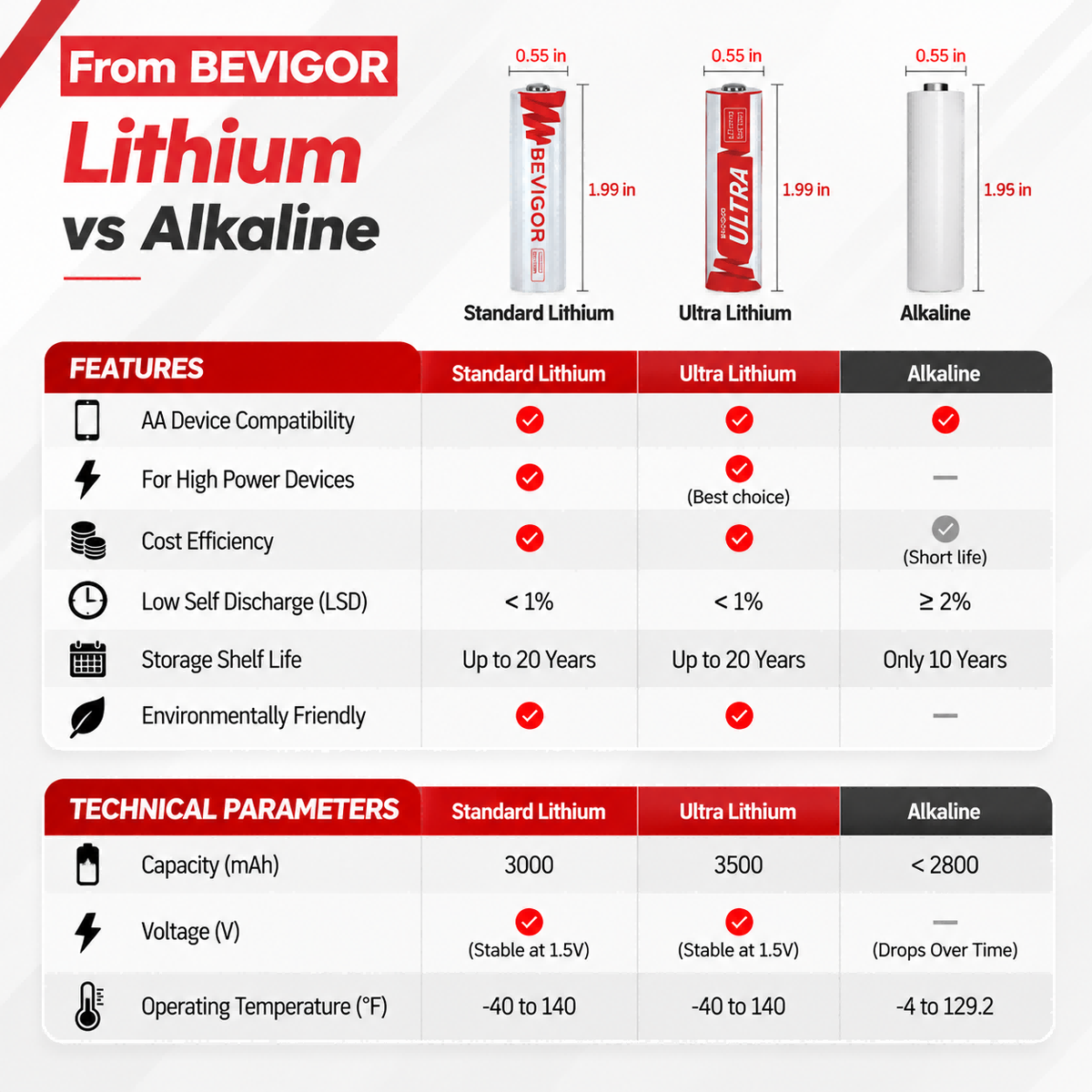
BEVIGOR offers 1.5V non-rechargeable lithium AA batteries in multiple pack sizes. BEVIGOR is not affiliated with or endorsed by Blink. Verify the current requirement for your exact camera before ordering or installing any replacement battery.
Frequently Asked Questions
Can NiMH rechargeable batteries work in a Blink camera?
They may power some devices temporarily, but common NiMH AA cells are rated at 1.2V and do not match a requirement for AA 1.5V lithium non-rechargeable batteries. Follow the current documentation for your exact Blink model.
Can I use 1.5V rechargeable lithium AA batteries?
Do not assume compatibility from the 1.5V label alone. A regulated rechargeable lithium AA differs from a primary non-rechargeable lithium AA in chemistry, electronics, cutoff behavior, and charging requirements. Use it only if the camera manufacturer’s current instructions explicitly permit it.
Can I use a 14500 rechargeable lithium-ion battery?
Not when the cell’s printed voltage is higher than the device specification. A 14500 cell labeled 3.6V or 3.7V does not match a 1.5V AA requirement and must not be treated as interchangeable simply because its shape resembles an AA battery.
Why does my Blink camera show low battery with charged rechargeables?
The battery voltage and discharge behavior may not match what the camera’s monitoring system expects. Temperature, activity, signal quality, settings, and battery condition can also affect the reading. Confirm the required battery type before troubleshooting further.
Are rechargeable batteries cheaper for Blink cameras?
Rechargeable batteries can reduce single-use purchases in devices designed for them. Cost does not establish compatibility, however. For a Blink model that specifies non-rechargeable lithium AA cells, first follow the device requirement and then compare pack size and replacement frequency without assuming a fixed runtime.
What battery type does Blink specify, and does BEVIGOR match it?
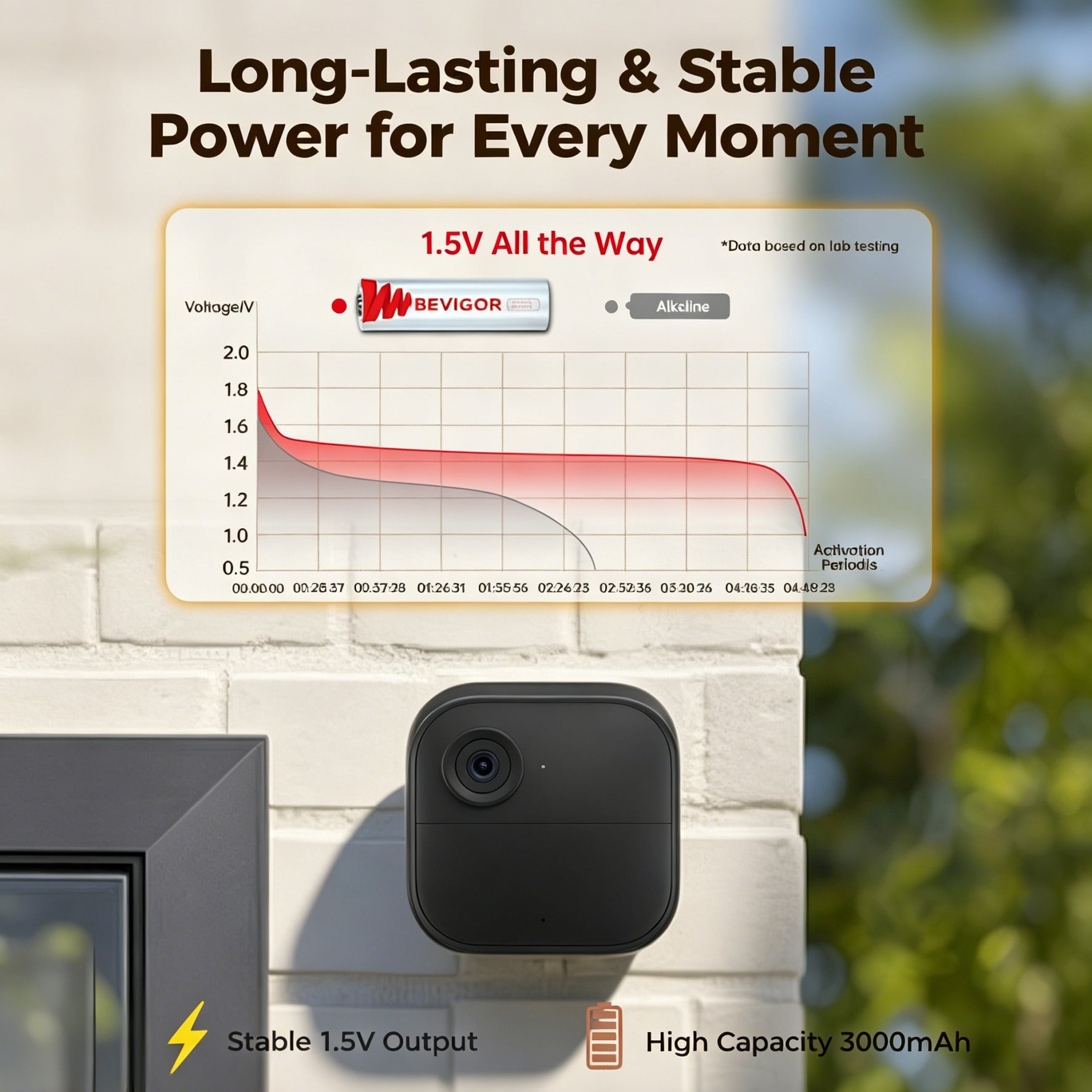
Blink specifies AA 1.5V lithium non-rechargeable batteries for its named AA-powered cameras. BEVIGOR’s 3000mAh AA lithium batteries are labeled AA, 1.5V, lithium, and non-rechargeable, so their published specifications match these general battery requirements. Confirm the current requirements for your exact Blink camera model before use, then view BEVIGOR 1.5V non-rechargeable lithium AA batteries.




Share:
Why Is My Blink Camera Flashing Red With New Batteries?
Trail Camera Battery Pack vs AA Batteries: Which Setup Makes More Sense?