

Do your outdoor trail cameras suddenly die during freezing winter nights? Failing power sources in the wilderness leave your expensive electronics completely useless when you need them most.
We analyze temperature limits and capacity to explain why AA lithium iron batteries keep critical survival equipment running safely.

The Internal Structure of AA Lithium Iron Batteries
Most standard consumer cells rely on water based liquid electrolytes and dense zinc paste to generate electrical current. This liquid core creates a massive physical vulnerability when ambient environmental temperatures shift dramatically. Instead of liquids, AA lithium iron batteries utilize a completely solid combination of a metallic lithium anode and an iron disulfide cathode.
According to technical research regarding cell architecture from Battery University, replacing liquid components with solid metallic structures drastically reduces the risk of internal corrosion and casing expansion. By choosing a solid state chemistry, your expensive GPS units and digital cameras remain safe from the destructive acid leakage that frequently plagues cheaper disposable power sources. The physical absence of moisture inside the metal casing means there is nothing to expand and rupture the seals.
How Freezing Climates Affect AA Lithium Iron Batteries
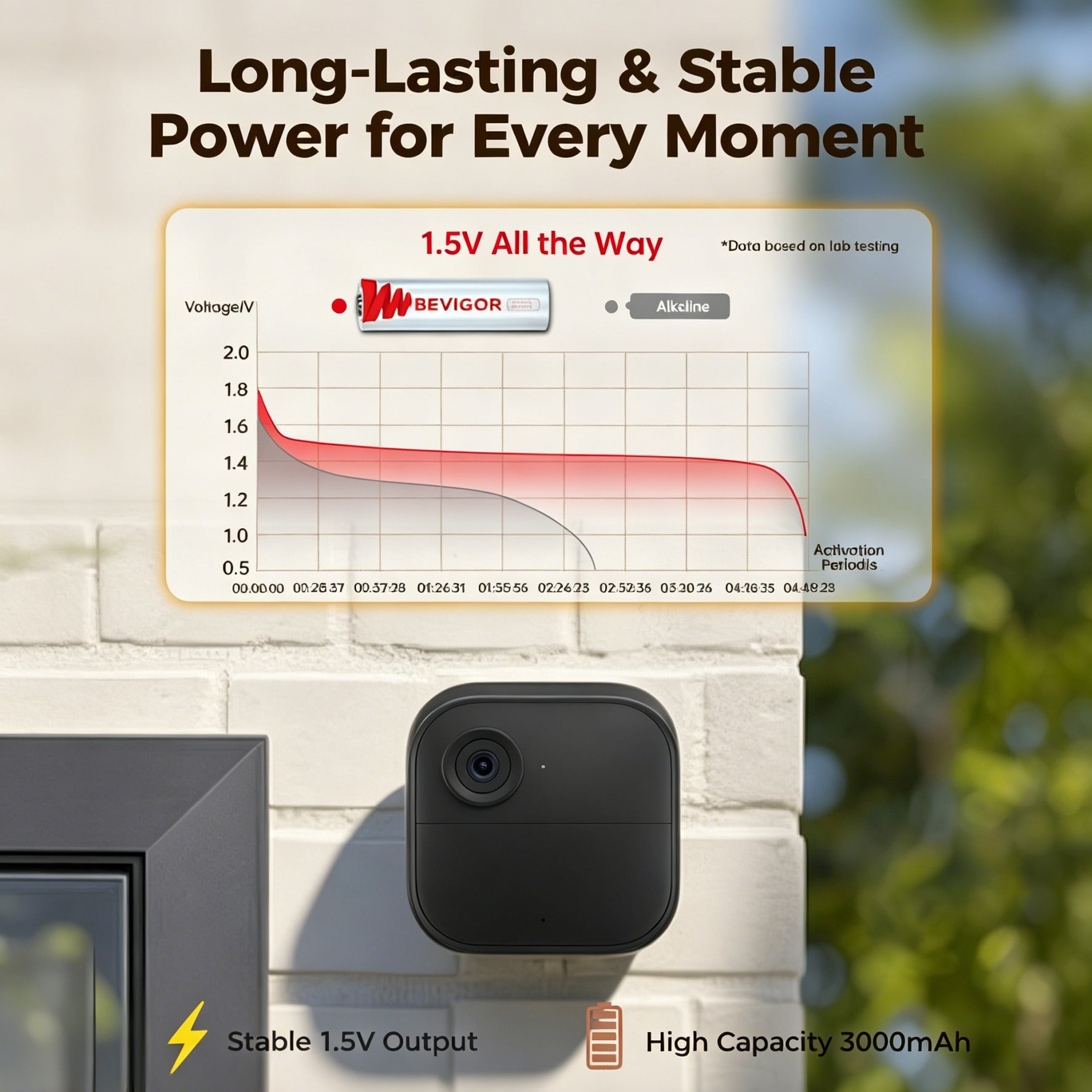
Here is the deal. When the outdoor thermometer drops below freezing, the liquid electrolyte inside a standard alkaline cell thickens and slows down, causing severe internal electrical resistance. This sudden physical resistance blocks the flow of ions and causes a massive voltage drop, shutting down your emergency headlamp even if the cell was just removed from its original packaging.
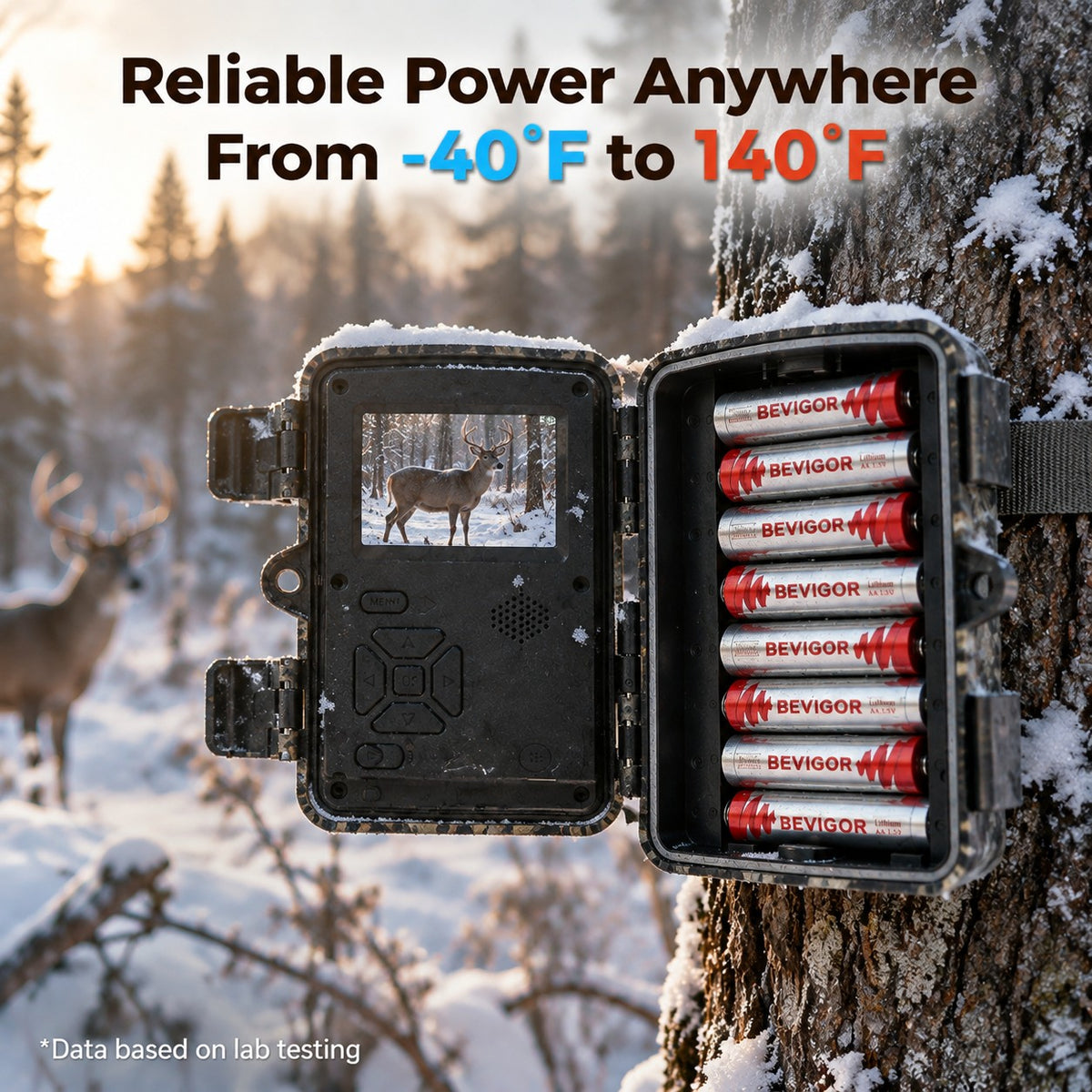
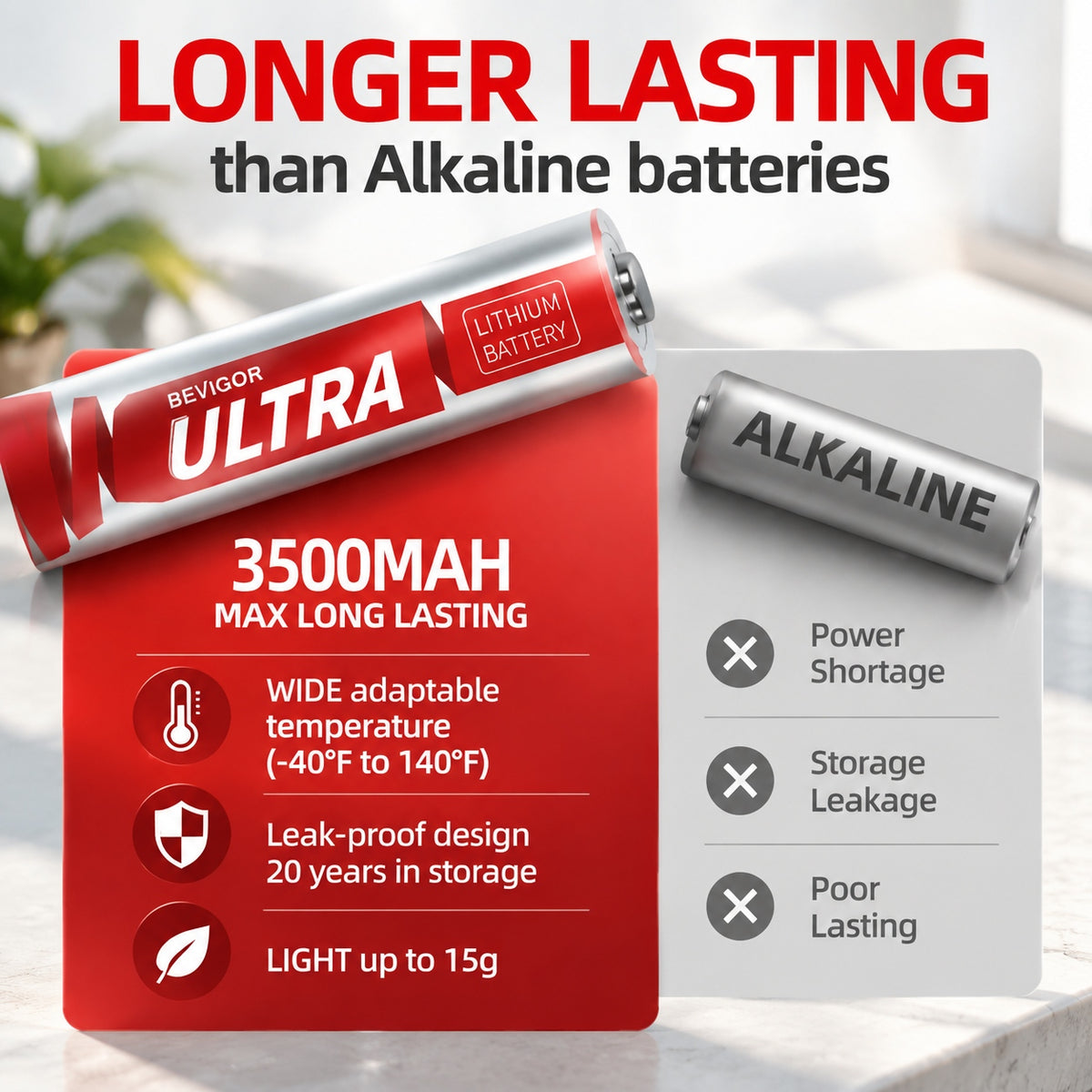
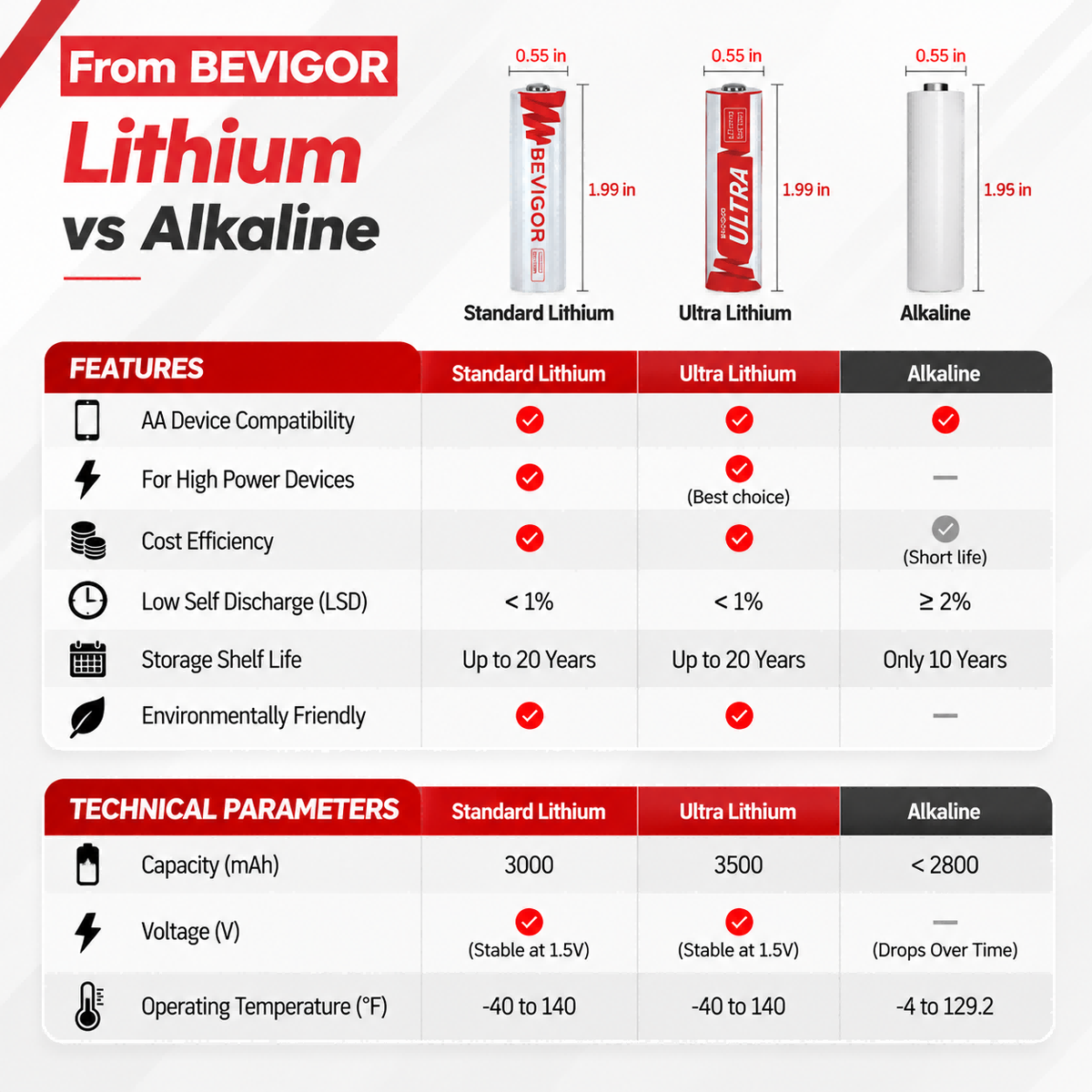
Because they lack these liquid vulnerabilities, AA lithium iron batteries operate smoothly in extreme environments dropping down to minus 40 degrees Fahrenheit, according to official Bevigor laboratory testing parameters. Extensive field research published by the National Renewable Energy Laboratory (NREL) confirms that mitigating internal resistance is the single most important factor in maintaining reliable electrical output during severe cold weather operations.
Comparing Outdoor Gear Power Specifications
Selecting the correct energy source depends heavily on the physical demands of your specific outdoor environment and the continuous current draw of your hardware.
|
Feature |
Standard Alkaline |
NiMH Rechargeable |
AA Lithium Iron Batteries |
|
Internal Core |
Liquid electrolyte |
Solid components |
Solid metallic components |
|
Extreme Cold |
Fails quickly |
Operates moderately |
Operates perfectly |
|
Weight Profile |
Heavy |
Standard |
Very light |
|
Output Voltage |
1.5 Volts (sloping) |
1.2 Volts (flat) |
1.5 Volts (flat) |
|
Primary Role |
Indoor low drain items |
Daily reusable toys |
High drain survival gear |
If you only camp during mild summer weekends, standard disposable or reusable NiMH options provide adequate performance for basic flashlights. However, for winter mountaineering, search and rescue operations, or remote wildlife photography, exploring the extreme temperature options available in the Bevigor catalog ensures your critical gear functions flawlessly regardless of the external climate.
Shedding Backpack Weight With AA Lithium Iron Batteries
Every physical ounce matters when you carry a heavy pack across mountainous terrain for several days. Metallic lithium is an incredibly lightweight element compared to the dense manganese and zinc materials used in traditional battery manufacturing. Because of this elemental difference, these specific cells weigh roughly one third less than their standard alkaline counterparts.
While saving a few grams seems trivial for a single television remote control in your living room, the weight reduction becomes highly noticeable when packing a dozen spare units for a week long backcountry expedition. Upgrading your headlamp, emergency radio, and handheld GPS to lightweight internal power sources reduces total physical fatigue during long uphill ascents.
Frequently Asked Questions
Why do they cost more than standard packs?
Sourcing raw metallic lithium and building leak proof solid state internal casings requires more complex and expensive manufacturing processes than simply injecting liquid paste into standard metal tubes. The higher upfront cost pays for hardware protection and extreme weather reliability.
Can I use them in standard household items?
Yes. They output an initial 1.5 volts, perfectly matching the standard electrical requirements for wall clocks, wireless computer mice, and smart door locks without overloading the internal circuits.
Are they the same as NiMH cells?
No. NiMH cells are designed to be recharged hundreds of times and use a completely different internal composition. These lithium and iron disulfide units are primary disposable cells meant for a single, long term life cycle.
How long do they last in a storage drawer?
Because of their solid internal architecture, they experience an incredibly low self discharge rate. When stored in a dry, room temperature environment, they can sit securely on a shelf for up to twenty years while retaining the vast majority of their original factory power.
Do they work well in high heat environments?
They tolerate ambient heat much better than liquid based cells, preventing leakage in warm conditions. However, prolonged exposure to extreme summer temperatures inside a closed vehicle dashboard will eventually degrade their internal chemical capacity.
Safety Rules for AA Lithium Iron Batteries
To guarantee hardware safety and maximize your operational runtime outdoors, review these technical facts before installing power into your equipment.
- Capacity Data: Milliampere hour capacities and specific temperature limits reflect official Bevigor testing conditions. Your actual device runtime always fluctuates based on the continuous power draw and mechanical efficiency of your specific hardware.
- Usage Variables: Leaving bright LCD screens on or utilizing camera flashes frequently will deplete chemical energy significantly faster than passive intermittent use. Continuous wireless signal searching also drains power rapidly in remote areas.
- Hardware Taboos: You must never mix depleted units with fresh ones inside the same physical battery compartment. Always use cells of the exact same age and chemical makeup to prevent rapid reverse discharging and overheating.
- Safe Disposal: These primary units contain active metallic elements. Please utilize dedicated environmental resources like Call2Recycle to locate safe community drop off centers instead of tossing them into household trash bins.
- Compatibility Checks: Always verify the continuous voltage limits of your outdoor equipment before use. For further guidance on matching power supplies to your specific electronics, visit the Bevigor educational portal.



Share:
Lithium AA Batteries vs. Alkaline: Which Should You Use?
Why Switch to Rechargeable Batteries?