

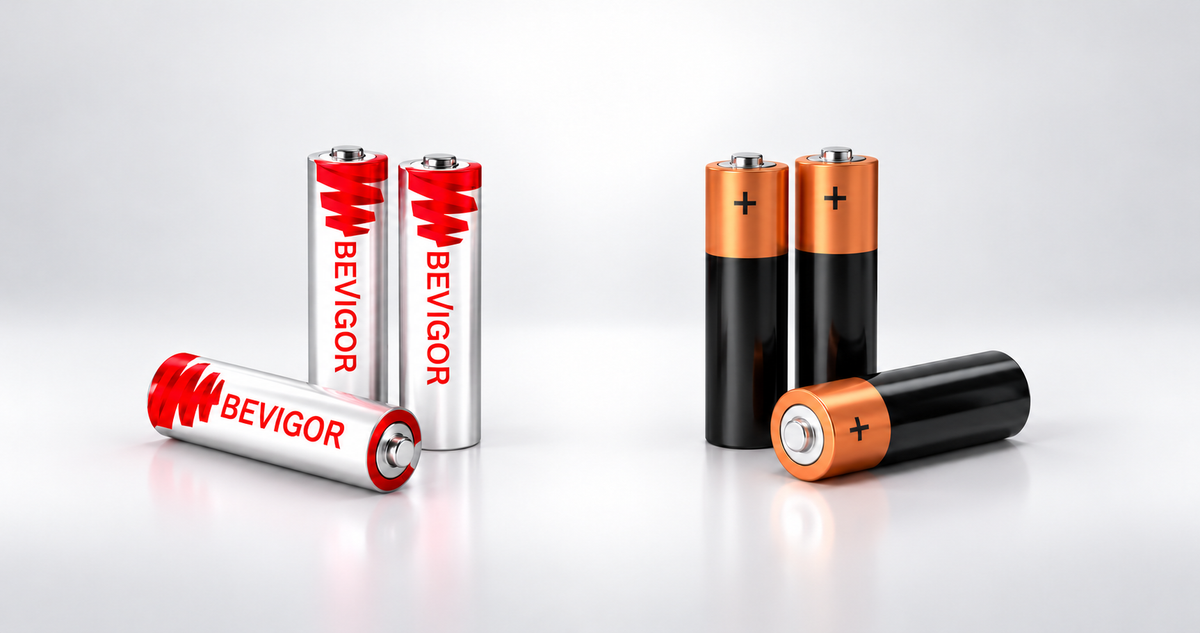
Lithium and alkaline AA batteries share a familiar size and a 1.5-volt nominal rating, but they do not behave the same way inside every device. The better choice depends on power demand, temperature, replacement access, device instructions, and total cost—not on one chemistry being universally “best.”
Lithium AA vs. alkaline at a glance
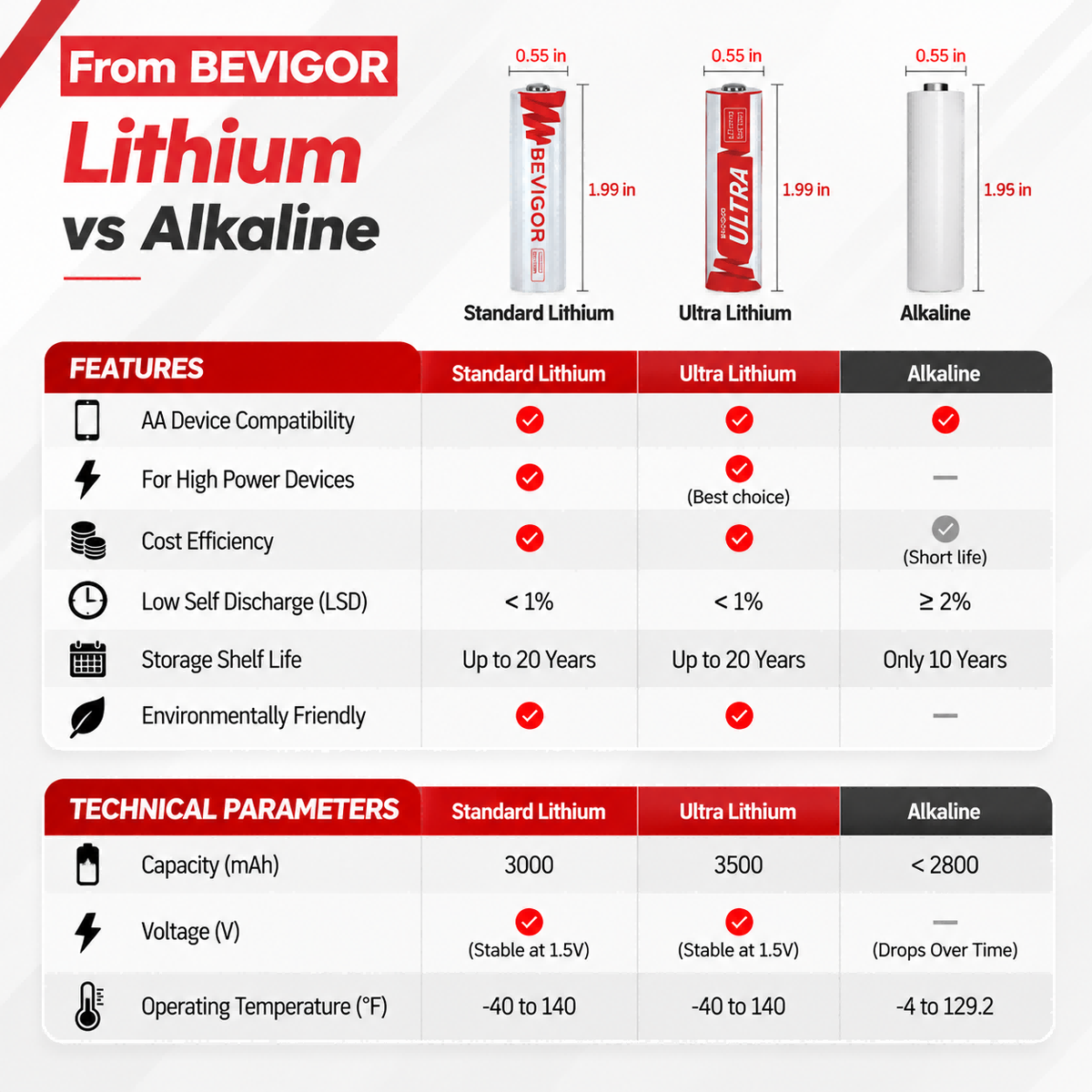
| Decision factor | Primary lithium AA | Alkaline AA |
|---|---|---|
| Nominal voltage | Common lithium iron disulfide AA cells are rated 1.5 V | Common alkaline AA cells are rated 1.5 V |
| High-drain use | Often better suited to repeated power bursts, depending on the cell and device | May deliver shorter service as drain increases |
| Low-drain use | Can work when the device permits it, but the higher price may not add enough value | Often a cost-effective choice for clocks, remotes, and similar devices |
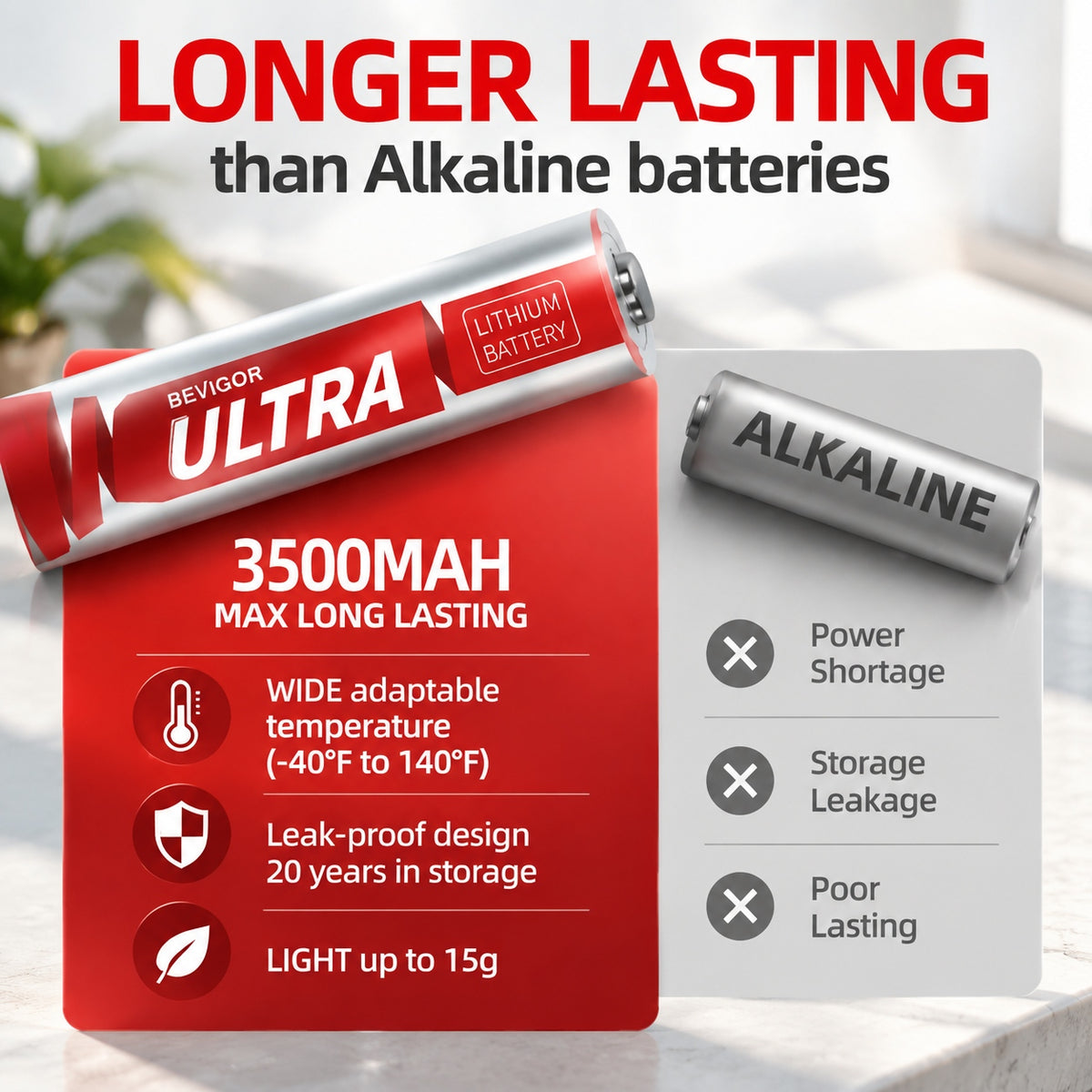
| Cold conditions | Lithium iron disulfide chemistry is commonly selected for broader temperature performance | Performance may decline more noticeably in cold conditions |
| Weight | Often lighter than a comparable alkaline cell; verify the specific product | Typically heavier for the same AA format |
| Upfront price | Usually higher | Usually lower |
| Rechargeable? | No, when labeled primary/non-rechargeable | No—standard alkaline AA batteries are single-use |
These are general chemistry-level tendencies, not guarantees for every brand, model, temperature, or device. Compare the product label and technical documentation before purchase.
What is the chemistry difference?
Most disposable alkaline AA batteries use zinc and manganese dioxide with an alkaline electrolyte. A common 1.5-volt primary lithium AA chemistry is lithium iron disulfide, written Li/FeS2. Both can fit an AA battery compartment, but their internal chemistry changes how voltage, available capacity, weight, and temperature response behave under load.
Nominal voltage is only one part of compatibility. Devices also have operating-voltage limits, current demands, battery monitoring logic, and manufacturer-approved chemistries. That is why an identical physical size does not automatically make every AA battery interchangeable in every product.
How voltage behavior affects devices
Alkaline voltage generally declines as the battery discharges, and the decline can be more pronounced under heavier loads. Lithium iron disulfide cells tend to maintain useful voltage more consistently through a larger portion of discharge. For one product-specific example, the Energizer L91 product datasheet compares discharge behavior under defined test conditions. In compatible electronics, that behavior can help devices continue operating when the device would otherwise report a low battery or shut down under load. Results for that product are not BEVIGOR specifications.
This does not mean a lithium AA battery supplies a perfectly fixed 1.5 volts, nor does it guarantee longer runtime in every device. Runtime depends on the battery model, duty cycle, cutoff voltage, temperature, storage history, and the device itself.
High-drain versus low-drain use
When primary lithium AA may be worth considering
High-drain and intermittent high-power devices can ask for short bursts of current. Compatible cameras, bright flashlights, electronic locks, sensors with wireless transmissions, and some outdoor devices may benefit from a cell designed to handle those demands. Fewer replacement visits can also matter when a device is difficult to reach.
If that describes your use case, browse BEVIGOR’s AA lithium battery collection and confirm the selected product specifications against the device manual.
When alkaline AA may be the practical choice
Low-drain devices such as basic wall clocks and simple remote controls often draw modest current over a long period. In these applications, inexpensive alkaline batteries may provide acceptable service at a lower initial cost. Buying a premium chemistry does not automatically produce the best value when the device has minimal power demand and batteries are easy to replace.
Cold weather, storage, and replacement access
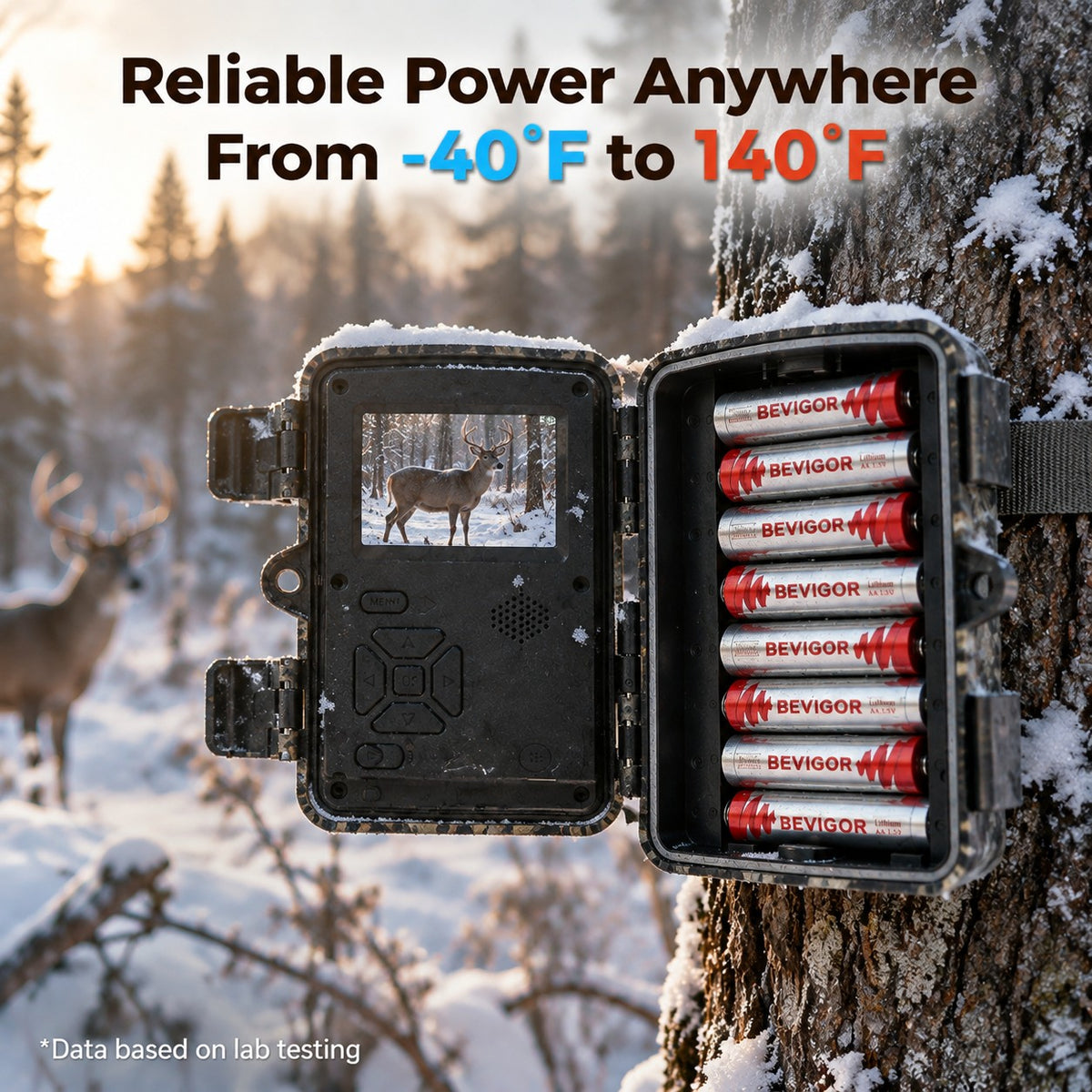
Temperature affects chemical reactions inside every battery. Primary lithium AA chemistry is often considered for outdoor or cold-weather use because compatible products may retain more useful performance as temperature falls. However, temperature limits belong to a specific product—not to every battery that contains lithium. Check the battery datasheet and the device’s operating range.
Storage claims require the same care. Shelf life is measured under stated storage conditions and varies by product. Do not assume that every lithium AA cell has the same shelf life, or that any battery is leak-proof. Store batteries in a cool, dry location, keep terminals away from metal objects, and inspect cells and equipment for damage or contamination before use.
Which option costs less in real use?
Alkaline normally wins on shelf price. The more useful comparison is cost per period of reliable service in your specific device. A higher-priced battery may be worthwhile when it reduces replacements, supports high-load operation, or lowers the labor needed to service remote equipment. In a low-drain device, the same premium may deliver little practical benefit.
For a fair comparison, record the device, usage pattern, environment, installation date, and replacement date. Compare like-for-like operating conditions instead of relying on a universal runtime multiplier.
Replacement access can change the calculation. The price of a cell is only one cost when someone must travel to a trail camera, climb to a sensor, or interrupt work to replace batteries. For an easy-to-reach kitchen clock, that service cost may be close to zero. For remote equipment, fewer dependable replacement visits may matter more than the lowest pack price. Treat this as an operational decision and test the exact battery-device combination before standardizing it across many units.
Can you replace alkaline AA batteries with lithium AA?
Sometimes—but check before switching. Confirm that the device accepts 1.5-volt primary lithium AA batteries and does not require alkaline, rechargeable NiMH, or another chemistry. Safety-critical equipment, medical devices, and products with a manufacturer-specified battery list deserve particular care.
- Read the device manual and battery-compartment markings.
- Use the same battery type, brand, and condition within one device set.
- Do not mix old and new batteries or lithium and alkaline cells.
- Observe polarity and never attempt to recharge a primary lithium or standard alkaline battery.
- Remove depleted batteries promptly and stop using any cell that is damaged, hot, swollen, or leaking.
These handling rules are consistent with Energizer’s battery care guidance, which advises following device instructions and not mixing batteries of different ages, types, or makes.
See the detailed guide: Can You Use AA Lithium Batteries Instead of Alkaline Batteries?
How long do lithium and alkaline AA batteries last?
There is no single responsible answer without a test condition. Battery life changes with current draw, pulse frequency, temperature, device cutoff voltage, storage age, and cell construction. Published results for one product should not be presented as a promise for another product.
For a deeper explanation of the variables, read How Long Do Lithium AA Batteries Typically Last?
Storage, recycling, and safety
Keep batteries in their original packaging or a suitable organizer until needed. Protect loose terminals from contact with coins, keys, or other conductive objects. Do not carry loose cells in a pocket or mix depleted batteries with fresh ones.
End-of-life rules vary by battery chemistry and location. The U.S. Environmental Protection Agency recommends identifying batteries by their markings. It says not to place single-use lithium batteries in household trash or municipal recycling bins; take them to a specialized battery recycler or an appropriate household hazardous-waste collection point instead. For alkaline batteries, check local or state waste guidance because available disposal and recycling options vary. See the EPA’s used household battery guidance before disposal.
Frequently asked questions
Are lithium AA batteries the same voltage as alkaline AA batteries?
Common primary lithium iron disulfide and alkaline AA batteries both have a nominal rating of 1.5 volts, but their voltage under load and through discharge can differ. Device approval still matters.
Do lithium AA batteries always last longer?
No. They may offer an advantage in some high-drain, cold, or hard-to-service applications, while alkaline may be adequate and more economical in low-drain devices. Specific runtime requires a defined battery, device, and test condition.
Are lithium AA batteries rechargeable?
Primary lithium AA batteries are not rechargeable. Only recharge a battery when its label and manufacturer explicitly identify it as rechargeable and specify a compatible charger.
Can lithium and alkaline batteries be mixed?
No. Do not mix chemistries, brands, ages, or charge levels within one device. Replace the complete set with matching batteries.
Which is better for a remote control?
For a typical low-drain remote, alkaline is often a practical lower-cost choice. Use primary lithium only if the device permits it and its benefits justify the price for your situation.
The bottom line
Choose primary lithium AA for a compatible device when high drain, cold exposure, lower weight, or fewer replacement visits are important. Choose alkaline when the device is low drain, easy to service, and upfront cost is the main concern. In every case, the device manual and the exact battery specifications outrank a general chemistry comparison.
Sources and methodology
Technical background was checked against the Energizer L91 product datasheet as an example of one manufacturer’s lithium iron disulfide AA cell. Its product-specific values are not BEVIGOR specifications. General battery handling was checked against Energizer’s battery care guidance, and disposal guidance was checked against the U.S. EPA. Product claims should be updated only from the corresponding BEVIGOR SKU documentation.






Share:
Are 1.5V Lithium Batteries Better Than Alkaline?
Do AA Lithium Iron Batteries Survive Extreme Weather?