


Have your tactical flashlights or smart security cameras died unexpectedly in freezing weather? Standard power sources frequently fail under massive energy spikes.
We evaluate chemistry, sizing, and temperature variables to maximize how your CR123A lithium batteries perform under heavy stress.
How Do CR123A Lithium Batteries Handle Sudden Power Demands?
Household electronics consume energy at vastly different rates. A basic television remote sips tiny amounts of current over a period of years. In contrast, modern security equipment and photography gear require immense, instantaneous bursts of voltage to operate motorized lenses, infrared night vision sensors, or high-lumen LED bulbs.
When a standard alkaline cell is forced to deliver a massive spike of current, its internal resistance causes the voltage to drop significantly. This voltage sag often causes sensitive microprocessors to reset or power down entirely. A 3V cell is engineered specifically with a lower internal resistance. It maintains a steady voltage output even when a motorized camera physically moves. According to extensive material research on energy density published by the United States Department of Energy, specialized lithium compositions are necessary to handle these rapid discharge cycles without suffering catastrophic voltage drops.
Why the Chemistry Inside CR123A Lithium Batteries Matters
The internal chemical structure dictates how long an item stays powered and how safely it operates. These specific units utilize lithium manganese dioxide (LiMnO2) chemistry. This structure provides a completely flat discharge curve. Instead of a flashlight slowly growing dimmer over several weeks, the light remains brightly illuminated until the power is almost entirely depleted.
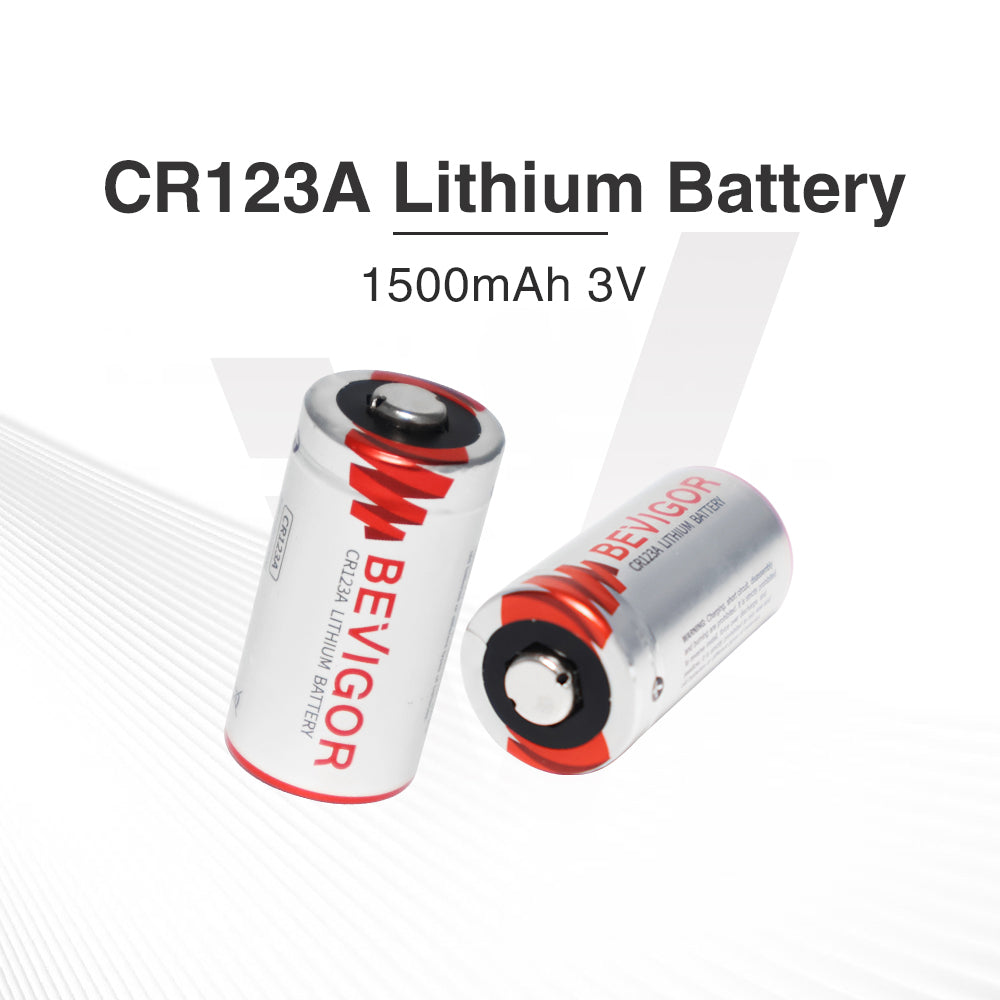
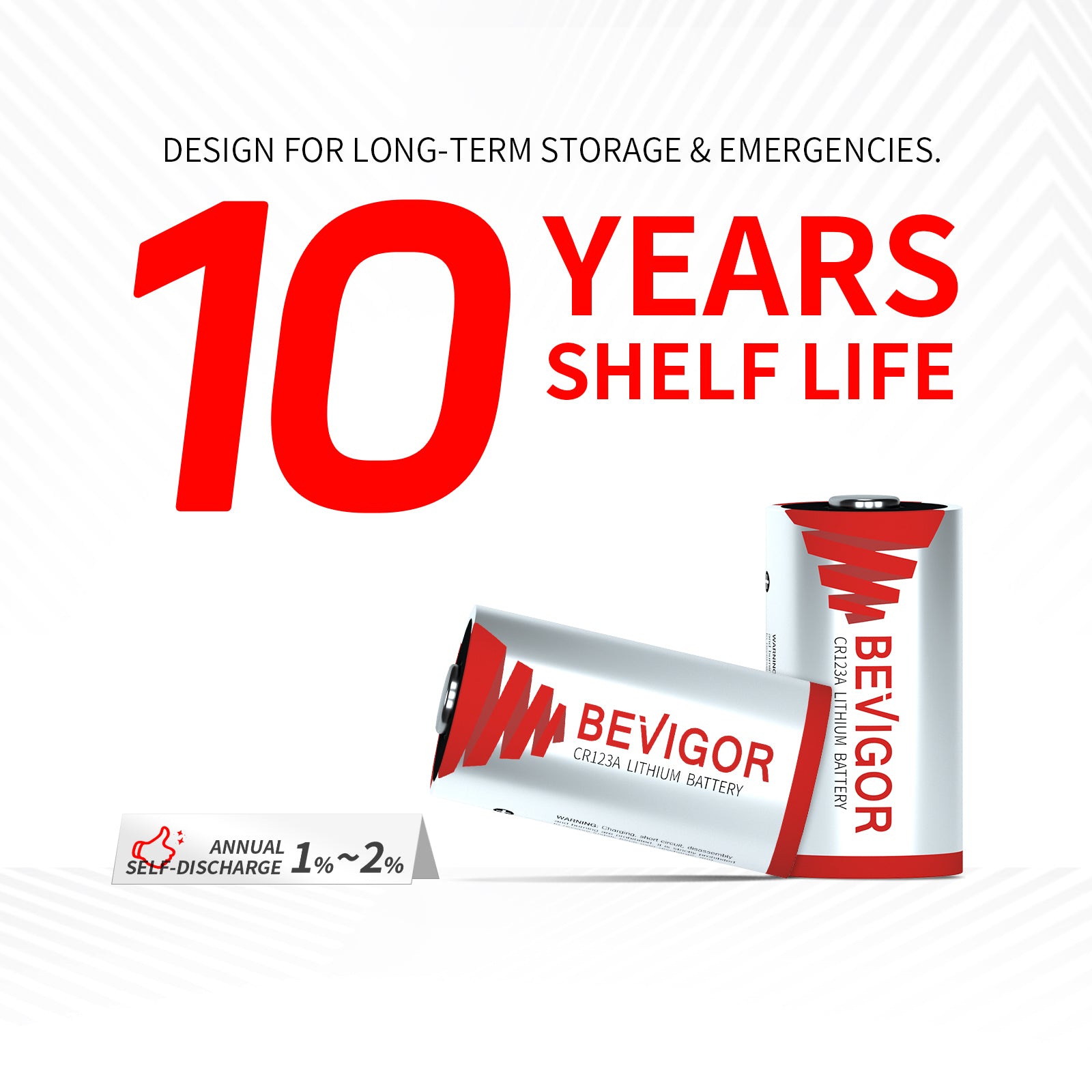
While heavy-duty NiMH rechargeable units are excellent for continuous-drain gaming controllers, they suffer from natural self-discharge when sitting idle. A security sensor powered by NiMH might go dead in a few months simply from parasitic drain. Based on official specifications by Bevigor, their specific models typically offer a nominal capacity of 1500mAh with an incredibly low self-discharge rate. This allows them to sit dormant in a smoke detector for years while retaining enough capacity to trigger a loud alarm. When outfitting an entire home, you might use standard AA lithium options for minor accessories, but the 3V cylindrical CR123A lithium batteries remains strictly necessary for the heavy-lifting network nodes.

Climate Tolerance for CR123A Lithium Batteries
Environmental temperature directly manipulates electrochemical reactions inside any power cell. Water-based electrolytes power standard consumer cells, meaning the internal liquid thickens considerably as temperatures drop toward freezing. This severely limits ion movement and caps the amount of power the cell can deliver to your hardware.
Here is the deal: solid-state lithium chemistry contains no water. It does not freeze in the middle of a winter snowstorm, nor does it expand and rupture during a scorching summer heatwave. Recent electrochemical degradation studies featured by the National Institutes of Health confirm that lithium-based formulations maintain stable discharge rates across massive temperature spectrums. Relying on this temperature-stable chemistry ensures your outdoor security routine triggers instantly, regardless of the season.
Voltage Compatibility Risks for CR123A Lithium Batteries
Understanding the physical dimensions and electrical output of your cells prevents permanent hardware damage. The specific numerical designation refers to a physical size, but the market also offers rechargeable lithium-ion equivalents, commonly labeled as 16340 cells.
While a 16340 cell physically fits into the same slot, it carries a fully charged voltage of 4.2V, compared to the strict 3.0V output of a primary non-rechargeable cell. If you place two 16340 cells into a flashlight designed for a maximum of 6 volts, you are suddenly pumping over 8 volts into the circuit board. This electrical overload will instantly destroy the LED emitter and permanently fry the internal microchips. Always match the exact voltage parameters listed in your manufacturer's user manual before forcing a casing closed.
Evaluating Geometries for Smart Devices
Homeowners often wonder how different form factors compare when managing a large ecosystem of smart devices. Mapping out your hardware requirements helps you allocate resources effectively and prevent unnecessary maintenance chores.
|
Power Format |
Nominal Voltage |
Discharge Curve |
Typical Smart Home Application |
|
AA Alkaline |
1.5V |
Sloping (Fades) |
Indoor buttons, simple remotes |
|
AAA NiMH |
1.2V |
Moderate |
High-drain motorized smart blinds |
|
CR123A Lithium |
3.0V |
Flat (Consistent) |
Security cameras, tactical lights |
Common Questions About CR123A Lithium Batteries
What causes tactical flashlights to step down brightness automatically?
Many modern flashlights have thermal regulation microchips. If the LED generates too much heat, the circuit lowers the current draw to protect the internal components. Additionally, if the internal resistance of a low-quality cell causes a voltage sag under heavy load, the flashlight drops to a lower brightness setting to prevent the system from shutting off entirely.
Can I substitute two AA alkaline cells for a single 3V unit?
No. Aside from the obvious physical size differences, two alkaline AA cells in series only produce 3.0V when completely brand new, and that voltage drops immediately upon use. A dedicated 3V cell maintains a steady voltage under load, which is what the circuit board requires to function properly.
Does leaving the equipment in a hot car degrade capacity?
While these cells withstand significantly higher temperatures than standard household variants, the dashboard of a parked car in direct sunlight easily exceeds 140°F (60°C). Prolonged exposure to extreme heat accelerates internal chemical degradation, permanently reducing the total runtime of your sensitive hardware.
How do smart home hubs measure remaining energy levels?
Smart hubs usually estimate remaining capacity by reading the current operational voltage. Because lithium maintains a flat 3.0-volt output until it is nearly dead, hubs often read full capacity for a year, and then suddenly drop to zero. This is a normal characteristic of the chemistry, not a defect in the sensor.
Essential Usage and Safety Guidelines
Navigating the world of high-density energy requires a baseline understanding of operational parameters. Keeping these protocols in mind ensures your household electronics run reliably.
- Parameter Specifications: All stated capacities (mAh) and voltage outputs are based on official specifications by Bevigor under controlled laboratory testing conditions.
- Performance Variables: Real-world longevity depends heavily on the external temperature, the specific hardware's power draw, and how frequently infrared night vision is triggered on your cameras.
- Avoid Mixing Units: Never stack a brand-new cell directly alongside a partially depleted one. This electrical imbalance causes rapid discharge and potential overheating.
- Invest in Protection: For comprehensive smart home builds, utilizing reliable bulk power solutions ensures all your network nodes share the exact same chemical age and performance characteristics.
- Safe Disposal: Concentrated reactive metals must not enter standard household trash. Always take depleted units to designated local electronic recycling facilities, following the guidelines provided by the Environmental Protection Agency to prevent heavy metals from leaching into the soil.
Share:
Lithium Iron AAA vs. Alkaline AAA Batteries: Which One Actually Wins for Your Devices?
What Are the Right AA Batteries for Your Electronics?