


Before buying batteries for a Blink camera, identify the exact model and read its current power requirements. Blink states that its battery-powered cameras are designed for size AA, 1.5-volt lithium, non-rechargeable batteries, and Blink recommends Energizer Lithium batteries for optimal performance while noting that performance can vary with other battery types. Some Blink products use USB or hardwired power instead, so the brand name alone does not tell you what to buy.
Use this guide to check the label, calculate complete replacement sets, and choose a pack size that fits the number of cameras you maintain. For opening a camera and installing a fresh set, use the separate Blink camera battery replacement guide together with Blink's instructions for your exact model.
The Four Label Details to Check
For a Blink model that uses replaceable AA batteries, confirm all four details before purchase:
- Size: AA
- Nominal voltage: 1.5 volts
- Chemistry: lithium
- Rechargeability: non-rechargeable
The words work together. An AA battery with a 1.5V label is not automatically the specified chemistry, and a rechargeable lithium AA is not the same category as a primary, non-rechargeable lithium AA.
Blink's current camera battery guide recommends Energizer Lithium 1.5-volt non-rechargeable batteries for optimal performance and says performance may vary with other battery types. Treat that manufacturer guidance as the controlling recommendation for a Blink device.
Confirm How Each Blink Device Is Powered
Do not order batteries from a household device count alone. First make an inventory of the exact models in the system.
For each device, record:
- Full model name and generation
- Battery-powered, USB-powered, or hardwired
- Required battery size and chemistry
- Number of cells in one complete set
- Whether an approved accessory changes the power arrangement
Blink's current power guidance explains that its product family includes AA-powered cameras as well as devices powered through USB or wiring. Check the model in the Blink app, on the device label, or in its current support documentation.
This article focuses on Blink cameras. Doorbells have model-specific battery counts, mounting hardware, wiring considerations, and Sync Module requirements and should be handled in a separate doorbell guide.
Calculate Complete Battery Sets Before Choosing a Pack
Multi-cell devices should receive a complete fresh set. Do not plan to replace only one weak cell or combine new batteries with partly used ones.
Use this formula for a group of identical cameras:
Total cells needed = number of cameras × cells per camera × planned complete sets
“Planned complete sets” includes the set being installed and any spare replacement sets.
Example: four cameras with one spare set each
Suppose four cameras each require two AA batteries. You want one installed set and one complete spare set for every camera:
| Supply | Calculation | AA cells |
|---|---|---|
| Initial installation | 4 cameras × 2 cells | 8 |
| One spare set per camera | 4 cameras × 2 cells | 8 |
| Total | 8 + 8 | 16 |
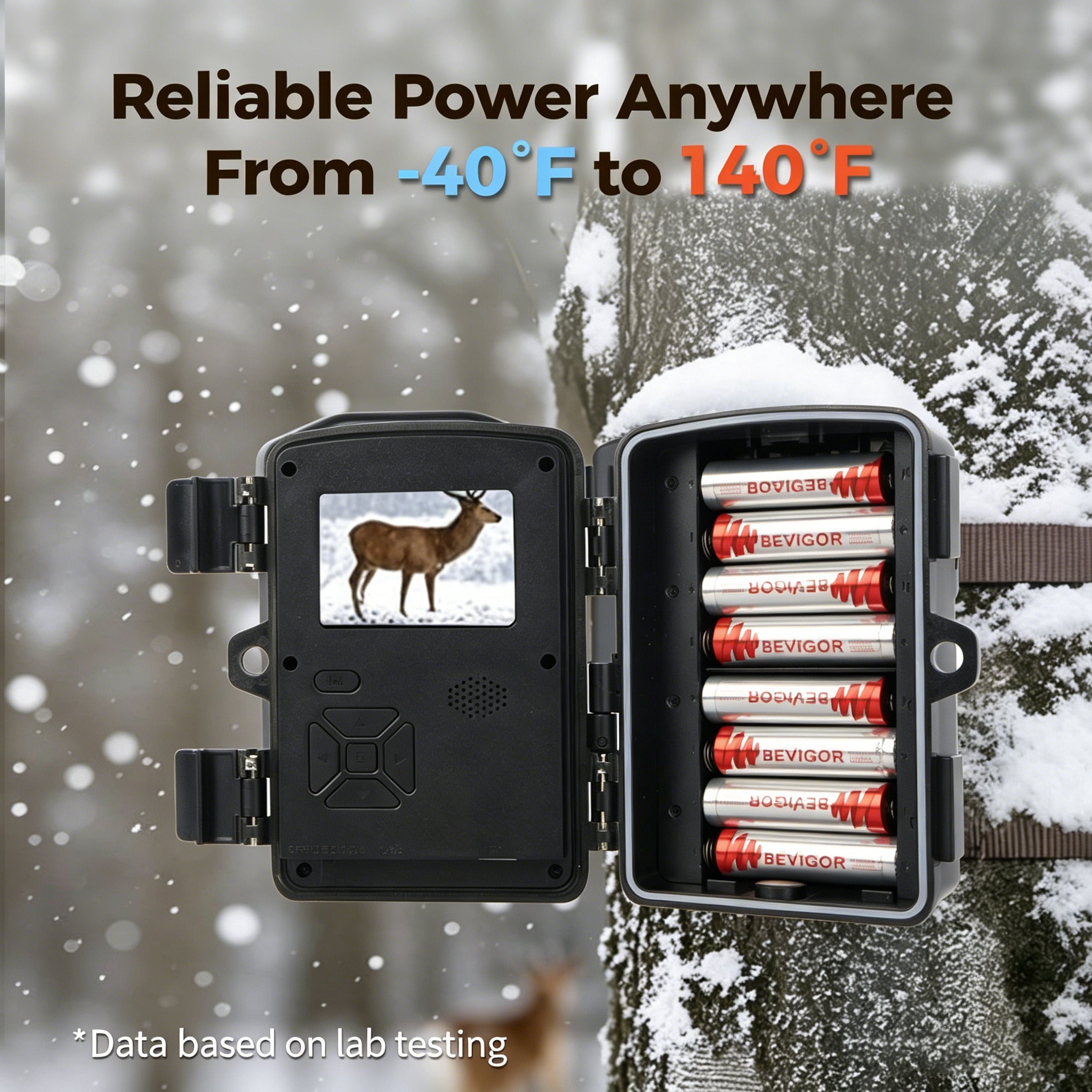
A 16-cell supply covers that plan. It does not predict how long the batteries will last. Runtime depends on the camera model, settings, motion activity, clip length, Live View use, infrared activity, signal conditions, temperature, battery condition, and other installation factors.
If the system contains different models or accessories, calculate each group separately and add the results. Always follow the documented cell count for the exact device.
How Many Spare Sets Should You Keep?
One complete spare set per camera is a practical starting point, not a universal rule. Adjust the amount to the consequences and inconvenience of a camera going offline.
Consider additional complete sets when:
- Cameras are difficult to reach
- The property is visited infrequently
- Motion activity or Live View use is high
- Several cameras are maintained at once
- Cold or other demanding conditions are expected
- A missed recording would create a meaningful security gap
Fewer spares may be reasonable when cameras are easy to reach, usage is light, and replacement batteries can be obtained quickly. Avoid accumulating more batteries than the household can store, rotate, and use responsibly.
Compare Cost per Complete Set, Not Only Cost per Cell
A low price per battery can be misleading when the available pack does not divide into the complete sets your cameras require.
Calculate:
Cost per complete set = pack price ÷ number of complete model-specific sets in the pack
Also consider whether the leftover cells form a usable full set. For a two-cell camera, an even-numbered pack divides cleanly. A mixed fleet requires a simple inventory table so partial packs do not encourage mixing batteries of different ages or histories.
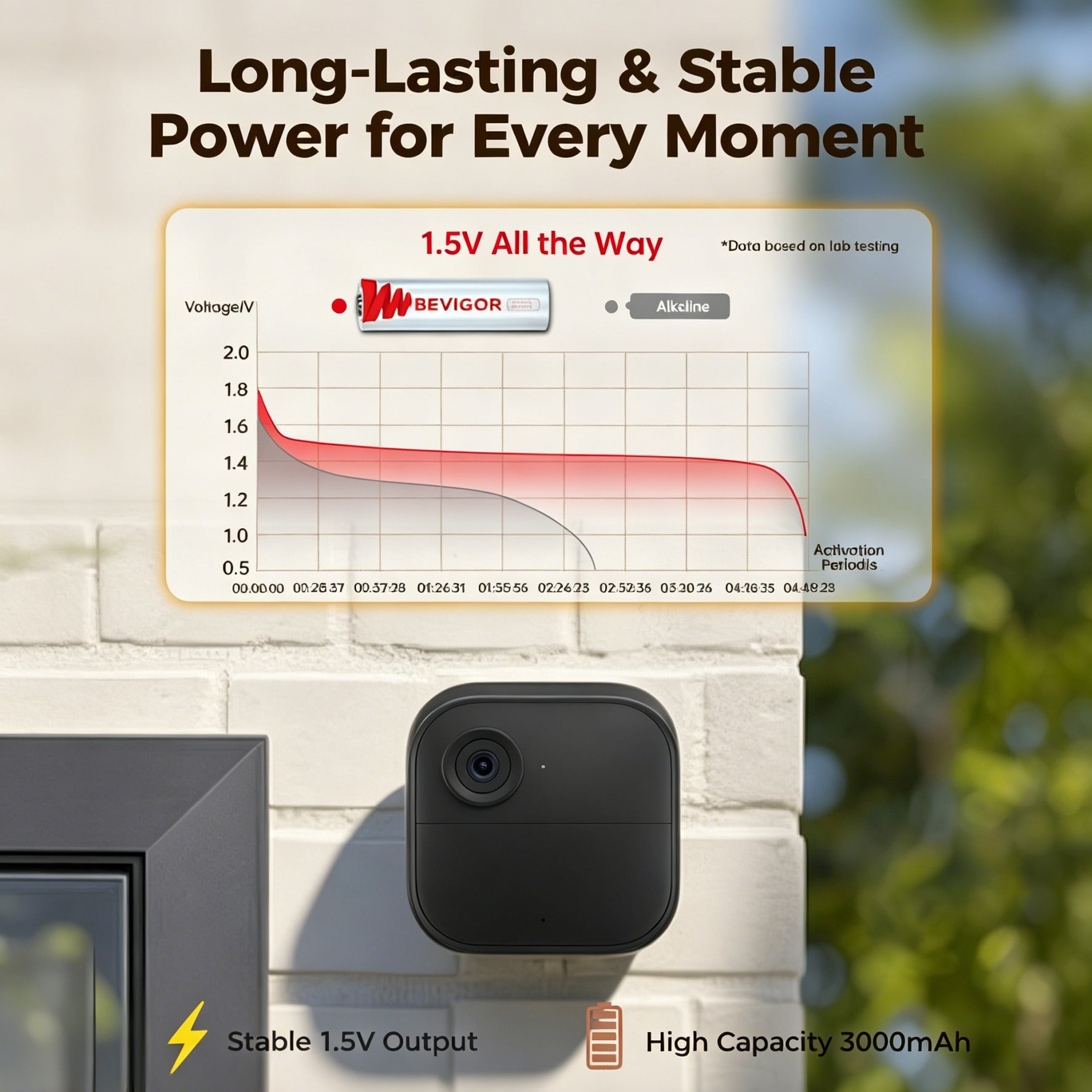
Do not compare products using an assumed number of months unless the claim comes from a documented test that matches the exact camera, settings, activity, network conditions, temperature, and battery type. Manufacturer “up to” estimates are conditional, not fixed replacement schedules.
Primary Lithium, Alkaline, and Rechargeable AA Are Different
AA describes a physical size, not one electrical system.
| Battery category | Common label | Rechargeable? | Buying implication for Blink cameras |
|---|---|---|---|
| Primary lithium AA | AA, 1.5V, lithium, non-rechargeable | No | Matches the general category Blink specifies for its named AA-powered cameras; follow the exact model guidance and Blink's current brand recommendation |
| Alkaline AA | AA, 1.5V, alkaline | No | Same size and nominal-voltage label, but not the specified lithium chemistry |
| NiMH AA | AA, commonly 1.2V, NiMH | Yes | Different nominal voltage and chemistry; not the specified battery type |
| Regulated rechargeable lithium AA | AA, often 1.5V, rechargeable lithium | Yes | Still differs from a primary non-rechargeable lithium AA; do not assume compatibility from the voltage label |
| 14500 lithium-ion | Often 3.6V or 3.7V Li-ion | Yes | Does not match a 1.5V AA requirement and should not be substituted based on shape |
For a fuller explanation, read whether rechargeable batteries can be used in Blink cameras.
Never place a primary or non-rechargeable battery in a charger. Do not mix chemistries, brands, models, ages, or substantially different states of charge in one device.
Check Product Labels Without Assuming Blink Approval
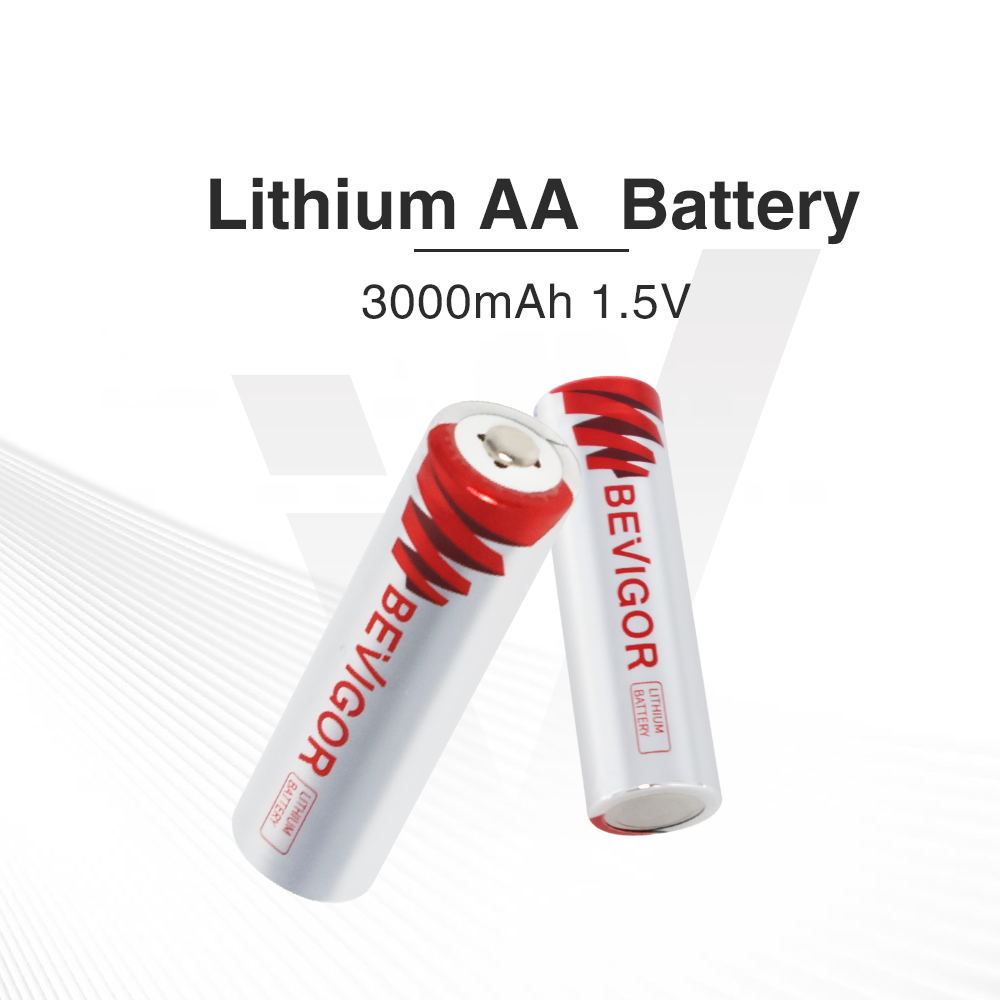
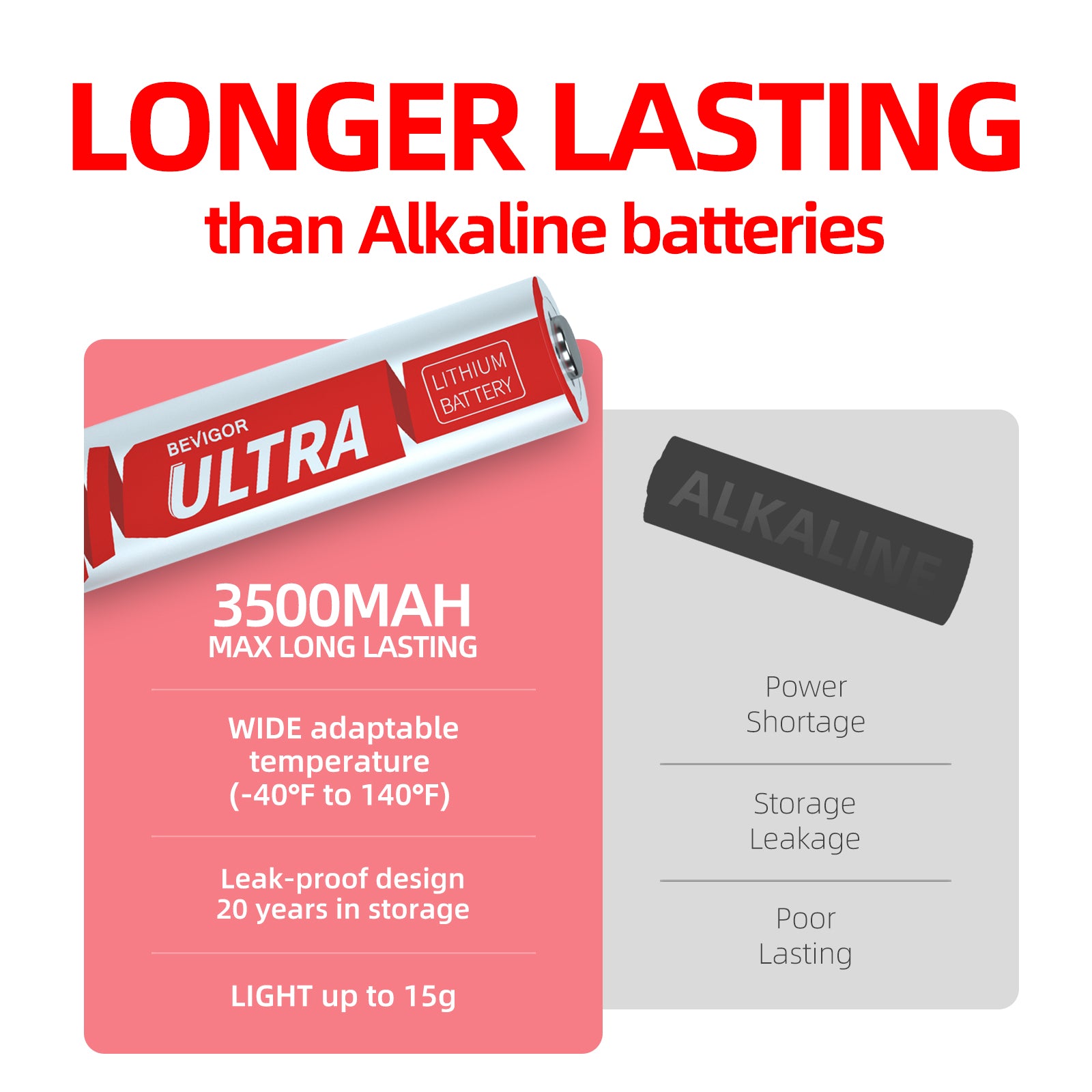
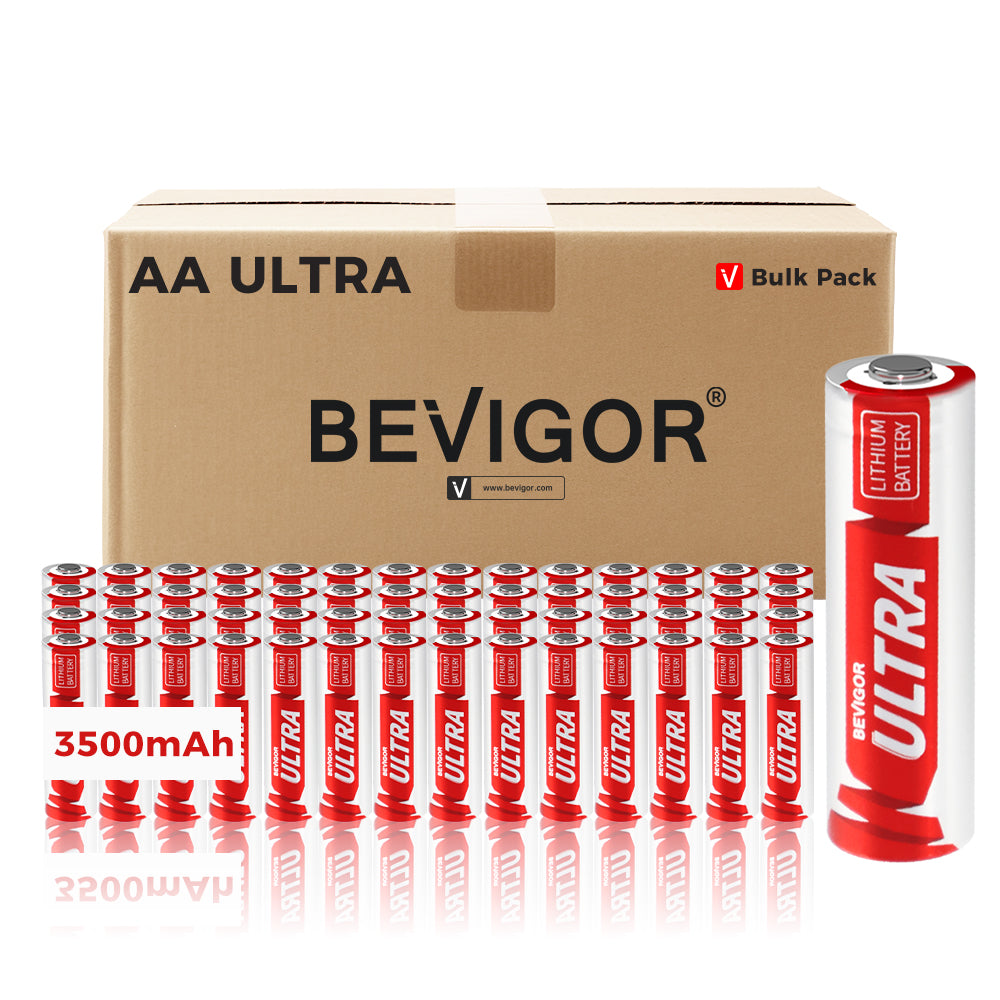
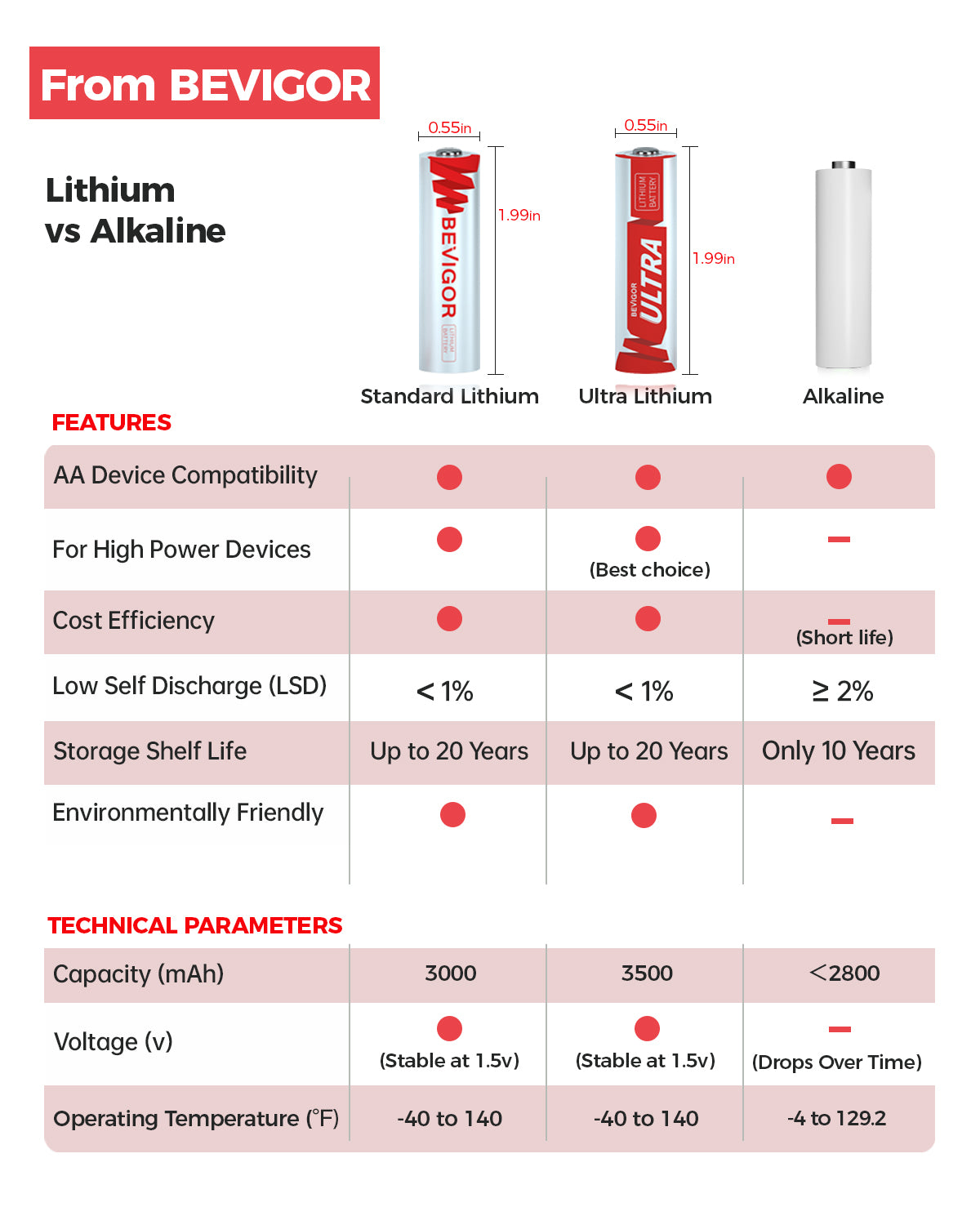
BEVIGOR's 3000mAh AA lithium product is labeled AA, 1.5V, lithium, and non-rechargeable. Those are relevant label details to compare with a device requirement, but an electrical-label match does not establish universal compatibility, Blink approval, or equal performance.
Blink currently recommends Energizer Lithium batteries for optimal performance and warns that performance may vary with other battery types. Follow Blink's recommendation and the current instructions for your exact camera. BEVIGOR is not affiliated with, endorsed by, or certified by Blink or Amazon.
Store and Rotate Spare Batteries
Keep spare batteries in their original packaging or another container designed to prevent loose terminals from contacting metal. Store them according to the battery manufacturer's temperature and handling instructions, away from children and pets.
Label opened packs with the purchase or opening date, and keep each planned camera set together. Use older suitable inventory before newer inventory, but do not combine batteries from unrelated partial sets merely to use them up.
Inspect batteries before installation. Do not use a cell that is leaking, swollen, corroded, unusually hot, or physically damaged. Keep removed batteries separate from fresh inventory.
For end-of-life handling, consult the US EPA household battery guide and local or state requirements. Disposal and recycling options vary by chemistry and location.
A Practical Buying Checklist
Before ordering, confirm:
- Every Blink device and generation is identified
- Each device actually uses replaceable AA batteries
- The required size, nominal voltage, chemistry, and rechargeability are verified
- The number of cells in one complete set is documented
- Installed and spare sets are calculated separately
- The selected pack divides into usable complete sets
- Blink's current manufacturer recommendation has been reviewed
- Runtime has not been treated as a guaranteed number of months
- A safe storage and rotation plan is available
- Used batteries have an appropriate local recycling or disposal route
The best purchasing decision is the one that matches the exact device requirement and supplies complete, manageable replacement sets without relying on an unsupported runtime promise.
Frequently Asked Questions
What batteries does Blink specify for its battery-powered cameras?
Blink states that its battery-powered cameras are designed for size AA, 1.5-volt lithium, non-rechargeable batteries. Blink recommends Energizer Lithium batteries for optimal performance and notes that performance may vary with other battery types. Verify the current instructions for the exact model.
How many AA batteries should I buy for several Blink cameras?
Multiply the number of cameras by the cells required per camera and by the number of complete sets you want. Calculate different models separately. For example, four two-cell cameras with one installed set and one spare set per camera require 16 cells.
Can I mix old and new batteries in a Blink camera?
No. Replace the complete set with fresh, matching batteries. Do not mix old and new cells or different chemistries, brands, models, or substantially different states of charge.
Can I use rechargeable batteries in a Blink camera?
Blink specifies non-rechargeable lithium AA batteries for its named AA-powered cameras. Rechargeable NiMH, regulated rechargeable lithium AA, and higher-voltage 14500 lithium-ion cells are different categories. Follow the exact model instructions rather than physical fit alone.
Does a higher mAh number guarantee longer Blink camera runtime?
No. A capacity label alone does not guarantee runtime in a specific device. Camera design, cutoff behavior, settings, motion activity, Live View use, infrared activity, network conditions, temperature, battery age, and other factors affect service life.
How long will a replacement set last?
There is no universal replacement interval. Treat any manufacturer “up to” estimate as conditional. Use the Blink app's battery alert and your own installation records to plan replacements for the actual camera and site.





Share:
Rechargeable vs Non-Rechargeable Batteries: Which Is Better?
Can You Take Batteries on a Plane? TSA Rules & Travel Tips 2026