

Tired of constantly buying expensive disposable cells for your high-power devices? You might wonder if switching to a sustainable power source actually saves money and improves performance long-term.
This guide explores how Rechargeable D Batteries handle high-drain loads compared to traditional primary alkaline battery options to help you make an informed decision.
Understanding the Tech Behind NiMH Rechargeable D Batteries
Modern portable power relies heavily on Nickel Metal Hydride (NiMH) chemistry. Unlike the older Nickel-Cadmium (NiCd) cells, Rechargeable D Batteries using NiMH do not suffer from the "memory effect," which previously forced users to fully discharge batteries before recharging. This advancement means you can top off your Bevigor cells whenever it is convenient without degrading their total capacity.
The internal structure of these cells is designed for high-energy density. According to Battery University's research on nickel-based chemistries, NiMH provides a stable voltage platform that is ideal for devices requiring consistent current. While alkaline batteries are "primary" (single-use), NiMH cells are "secondary," meaning the chemical reaction is reversible. Bevigor has optimized this process to ensure that the internal resistance remains low even after hundreds of cycles.
Comparing Alkaline vs Rechargeable D Batteries
When looking at an alkaline vs rechargeable D batteries comparison, the most striking difference is how they deliver power. Alkaline batteries start at 1.5V but drop in voltage almost immediately as they are used. In contrast, NiMH cells maintain a steady 1.2V throughout nearly the entire discharge cycle. Here is the deal: most high-drain devices actually perform more consistently with a steady 1.2V than a rapidly dropping 1.5V.
|
Feature |
Alkaline D Batteries |
Bevigor NiMH Rechargeable D Batteries |
|
Voltage |
1.5V (starts high, drops fast) |
1.2V (remains steady) |
|
Capacity |
High (for low-drain only) |
Up to 10,000mAh (High-drain optimized) |
|
Reusability |
None (Single-use) |
Up to 1,000+ Charges |
|
Leak Risk |
Higher (Potassium Hydroxide) |
Minimal (Pressure-vented design) |
|
Best For |
Wall clocks, low-power radios |
Flashlights, toys, water heaters |
Capacity Ratings for NiMH Rechargeable D Batteries
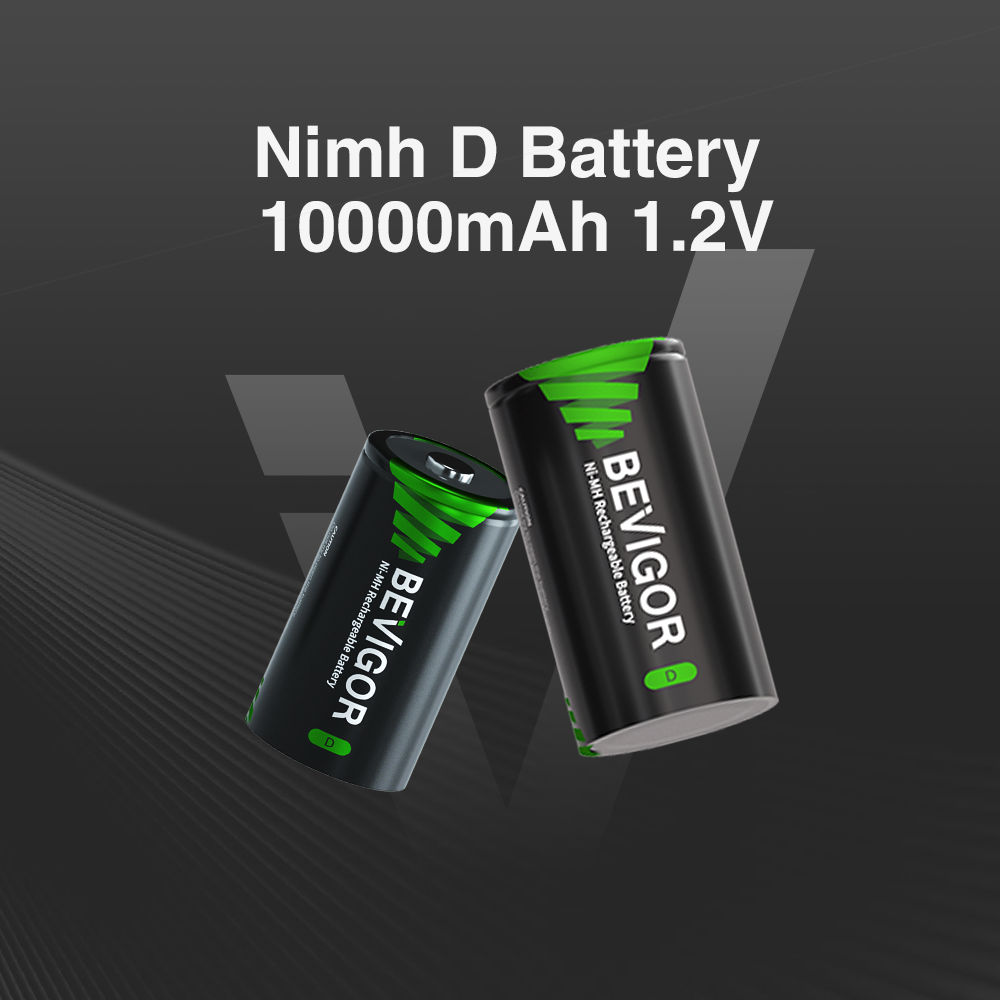
The runtime of your device is determined by the milliamp-hour (mAh) rating. Most standard alkaline D batteries do not list their mAh because their capacity varies wildly depending on the load. However, Bevigor Rechargeable D Batteries are typically rated at 10,000mAh (by Bevigor). This high capacity is essential for large devices like professional-grade LED flashlights or portable camping fans.
If you are used to smaller cells like AA Lithium batteries, you might be surprised by the sheer volume of energy a D battery can hold. While a AA might hold 2,500mAh to 3,000mAh, the D size offers nearly four times that energy. This makes them the workhorses of the battery world, specifically designed for industrial and high-performance consumer applications.

Ideal High-Drain Devices for Rechargeable D Batteries
Not every device requires the heavy-duty power of a D cell. However, for those that do, the choice of battery is critical. Rechargeable D Batteries are frequently used in devices that require high current or long runtimes without frequent swaps.
- Emergency Lighting: Large lanterns and tactical flashlights require high sustained current.
- Gas Water Heaters: Many tankless units use D cells to power the ignition pulse.
- Kids' Toys: Motorized cars and large RC vehicles drain alkaline cells in hours; NiMH offers a much cheaper cycle cost.
- Portable Heaters: Fans and ignition systems in propane heaters rely on the steady voltage of NiMH.
If your household also utilizes smaller devices, you might consider AAA Lithium batteries for remotes while reserving the heavy-duty NiMH cells for the equipment that does the heavy lifting.
How to Maintain Your NiMH Rechargeable D Batteries
To get the most out of your investment, proper maintenance is required. One of the most significant features of Bevigor NiMH technology is the "Low Self-Discharge" (LSD) capability. Older NiMH cells would lose 20% of their charge in a week just sitting on a shelf. Modern Rechargeable D Batteries can retain up to 80% of their capacity even after a year of storage.
For the best results, it is recommended to use a smart charger that can detect when the battery is full. Overcharging can lead to heat buildup, which is the primary enemy of battery longevity. The International Electrotechnical Commission (IEC) sets strict standards for secondary cell safety, and following these guidelines ensures your batteries remain safe over their 1,000-cycle lifespan. If you are storing them for more than six months, try to keep them at a 50% charge in a cool, dry place.
Environmental Benefits of Using Rechargeable D Batteries
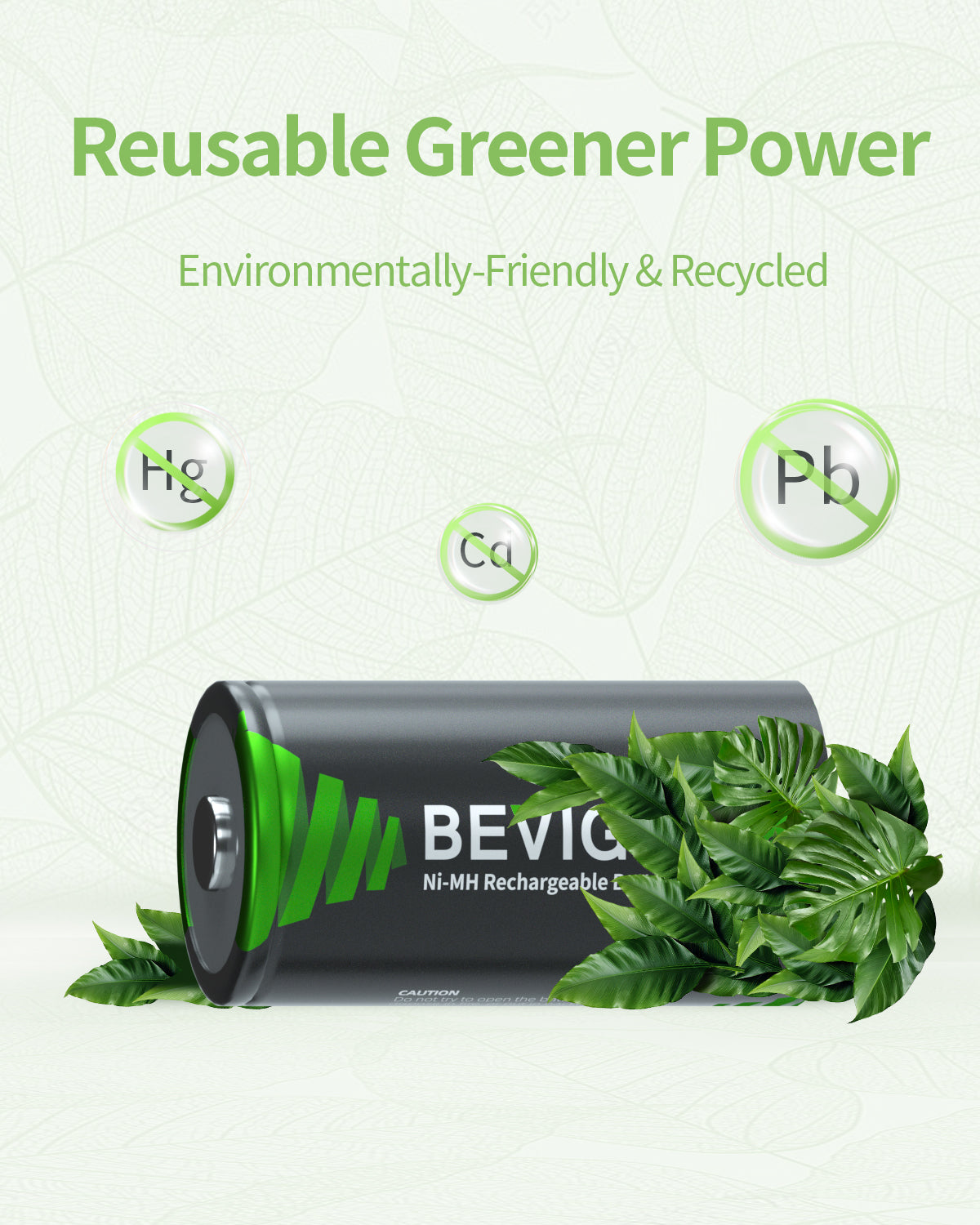
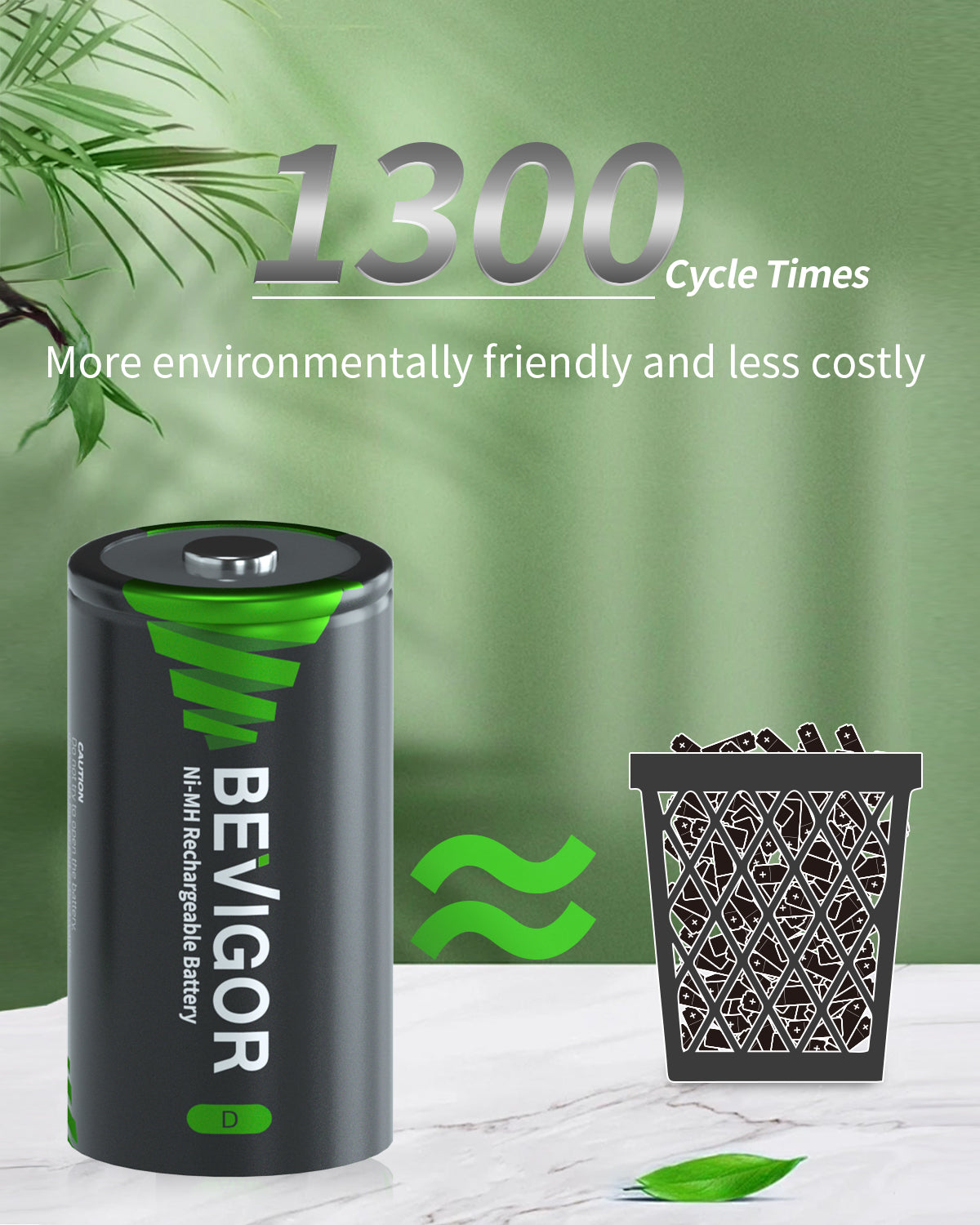
The environmental impact of disposable batteries is a growing concern. Single-use alkaline batteries often end up in landfills, where they can eventually leak trace amounts of metals into the soil. By switching to Rechargeable D Batteries, you effectively keep 1,000 disposable cells out of the waste stream.
According to the Environmental Protection Agency (EPA), recycling and reusing batteries significantly reduces the carbon footprint associated with mining raw materials. Since a single Bevigor D cell can be recharged hundreds of times, the "per-use" carbon cost is a fraction of that of an alkaline cell. This sustainability is a primary reason why many professional organizations are shifting away from primary cells for their daily operations.
Cost-Benefit Analysis of the Switch
Is the higher upfront cost of Rechargeable D Batteries worth it? Let’s look at the math. A high-quality D cell might cost four to five times more than a standard alkaline. However, if you use a device that requires a battery change once a month, you will break even on your investment in less than half a year.
After that break-even point, every charge is essentially free power. For high-frequency users, the savings over three to five years can reach hundreds of dollars. This logic applies across all sizes; whether you are buying D batteries or AA Lithium batteries, the goal is always to balance performance with long-term expenditure.
Common Questions About D Cell Technology
Can I use any charger for these batteries?
It is highly recommended to use a NiMH-specific smart charger. Chargers designed for NiCd may not have the sensitivity to stop charging at the right time, which can damage Rechargeable D Batteries.
Why do some D cells feel lighter than others?
Some cheaper brands "cheat" by placing a AA battery inside a D-sized plastic shell. This results in much lower capacity (around 2,000mAh). Authentic Bevigor Rechargeable D Batteries are full-sized NiMH cells, providing the full 10,000mAh capacity for maximum runtime.
Are these batteries safe for all weather conditions?
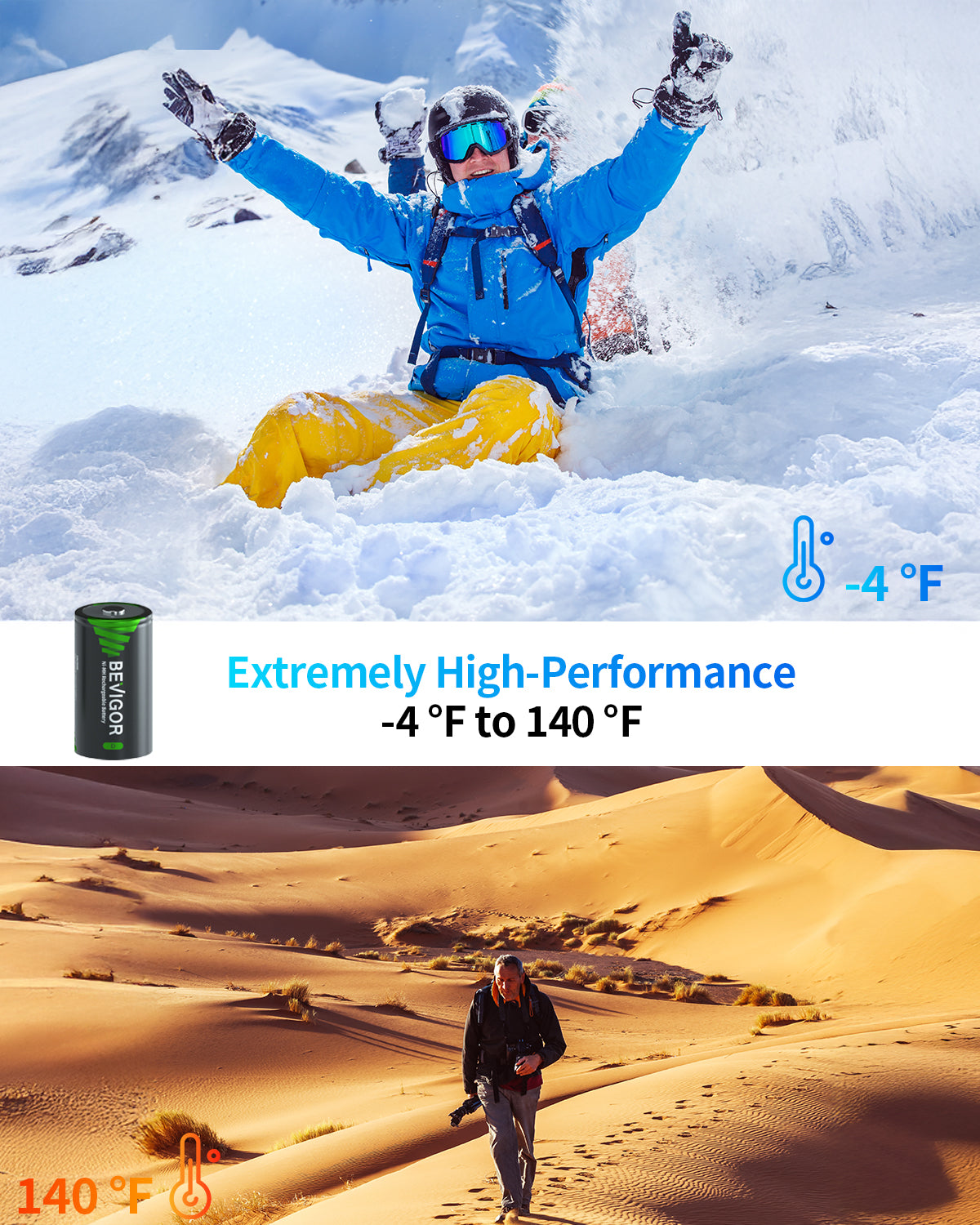
NiMH chemistry generally performs well between 32°F and 122°F. If you are operating in extreme sub-zero temperatures, you might notice a drop in performance, but for most household and camping applications, they are extremely reliable.
Do I need to "prime" new batteries?
New Rechargeable D Batteries usually reach their full capacity after 3 to 5 charge/discharge cycles. If they seem to drain a bit faster on the first use, don't worry—this is a normal part of the chemical "break-in" period.
How do I know when they need replacing?
You will notice the device's runtime decreasing significantly, or the charger may indicate a "faulty cell." Most NiMH batteries last for 3 to 5 years under normal household use before the chemistry begins to degrade.
Can I mix NiMH and alkaline batteries in one device?
Never mix different battery chemistries or different charge levels in the same device. Doing so can cause the weaker battery to over-discharge or leak, potentially damaging your electronics.
Guidelines for Safe Usage and Longevity
To ensure the safety of your home and the longevity of your gear, keep these transparency notes in mind:
- Avoid Total Depletion: Try not to drain your NiMH cells to 0%. Recharging when they hit 10-20% helps maintain chemical stability.
- Charging Temperature: Only charge batteries at room temperature. Charging a frozen or extremely hot battery can cause internal damage or venting.
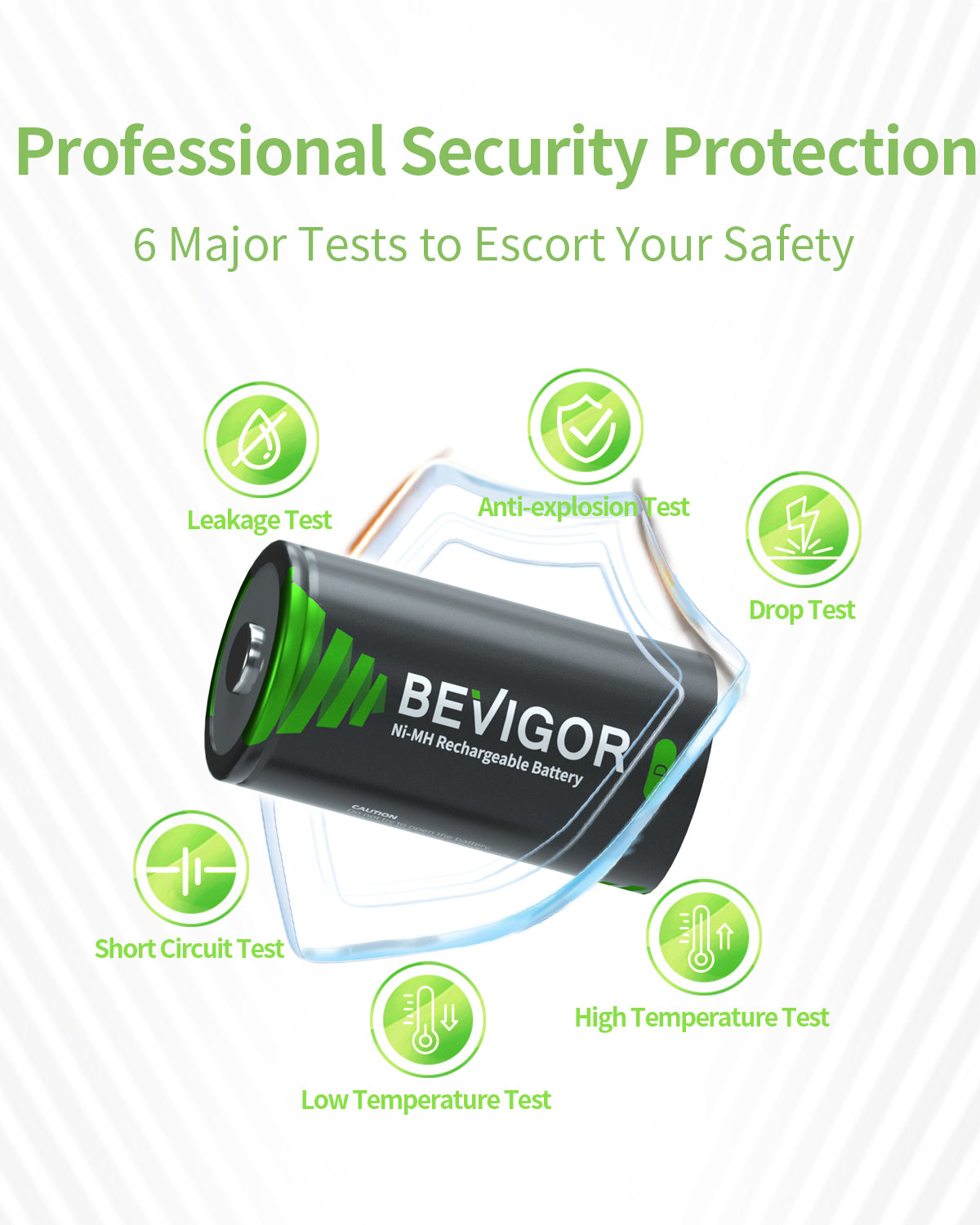
- Visual Checks: Periodically inspect your Rechargeable D Batteries for any signs of swelling or outer wrap damage. If the protective wrap is torn, replace the battery immediately to prevent short circuits.
- Recycling: When your batteries finally reach the end of their life, do not toss them in the trash. Use a dedicated battery recycling drop-off point to ensure the nickel and metal hydride are recovered properly.
Share:
What Should You Know About 9V Rechargeable Batteries?
NiMH vs 1.5V Rechargeable Lithium Batteries: Which AA, AAA, C, D, 9V Battery is Better?